Another big blog!
Hello,
Welcome to my latest big blog (10,000 words, plus plenty of pics) – this is really just part of my reflective practice. If you thought Part 1 was lengthy, Part 2 will certainly not be a quick read. I would like to think that if you are interested, you will gradually work your way through all of this – but maybe not all in one sitting. As this is a big one, I’ll provide a contents list:
- Brief Review of Part 1
- Introduction to Part 2
- Chi Nei Tsang Therapy
- Tok Sen Therapy
- Pa Khaw Ma Therapy
- Bamboo Massage Therapy
- Medical Massage Therapy
- Thai Cookery Class
- Mauy Thai Class
- Integrating Traditional Thai Massage Therapies into a UK-based Practice
- Future Study and Practice
- References
Brief Review of Part 1
In Part 1 of my Adventures in Traditional Thai Massage big blog, I explained the reasoning for heading over to Thailand to undertake studies at this time in my life. I provided some of the highlights from my travels at that point, the historical and cultural importance of Traditional Thai Massage (TTM), and an overview of the Old Medicine Hospital School in Chiang Mai. I offered a short critical discussion on the differences, similarities and potential integrated compatibility of allopathic and naturopathic medicine, with some consideration for the evidence to support TTM. The methods and fundamental principles of TTM were presented, and finally, an overview of my experience and thoughts on studying the foundation courses at the Old Medicine Hospital School.
Introduction to Part 2
For this second (essay-style) blog in the series, I will be reviewing my experiences from undertaking other traditional massage therapy courses in Thailand. I will also, again, delve into some of the underpinning aspects of the traditional and spiritual philosophies which drive energy medicine – always alongside a consideration of the scientific, anatomic, physiologic and psychologic – and I’ll attempt to offer my personal interpretation of some of this. I will support my own discussion with that of others via selected extracts from knowledgeable writers, spiritual authorities, and TTM masters.
I would not profess to have truly deep knowledge of energy medicine, Yoga, Thailand or Asia, Buddhism or Taoism (or even much else really!), but I respectfully acknowledge and appreciate the deeply spiritual concepts and beliefs, and I hope I can continue to learn a little more as the life that I know carries on. I do have my own working knowledge and skills, and I have a belief in and a consciousness of what I have been able to experience, practice and observe throughout my career. Life isn’t all about theory or study, knowledge or understanding – indeed, the other aspect to a full and developing life is the lived experience. Life is good when lived in balance, and in balancing our energy.
So, I took courses in Chi Nei Tsang Therapy, Tok Sen Therapy, Pa Khaw Ma Therapy, Bamboo Massage Therapy, and Medical Massage Therapy. While I was away, I was also able to fit in some other (loosely related) training, namely a Thai Cookery Class, and a Mauy Thai Boxing Class – and I’ll offer a brief overview of these experiences too. I’ll finish with some thoughts about how I can integrate these methods into my practice in the UK.
Chi Nei Tsang Therapy
This section is certainly a big read. I feel its length is justified because it incorporates a lot of fundamental background information and discussion which is applicable to traditional oriental medicine. Chi Nei Tsang was a therapy I had learned about only during my research for this trip. I was intrigued and motivated to experience and learn this seemingly esoteric and anatomically-focused therapy. My chosen school was the Chiang Mai Traditional Massage Training Centre (CTM), and the location for the course was at a small, associated and long-established therapy centre on the north side of town within the old city walls, and run by my personal teacher Nareena Tawanamai.
Chiang Mai Traditional Massage Training Centre.
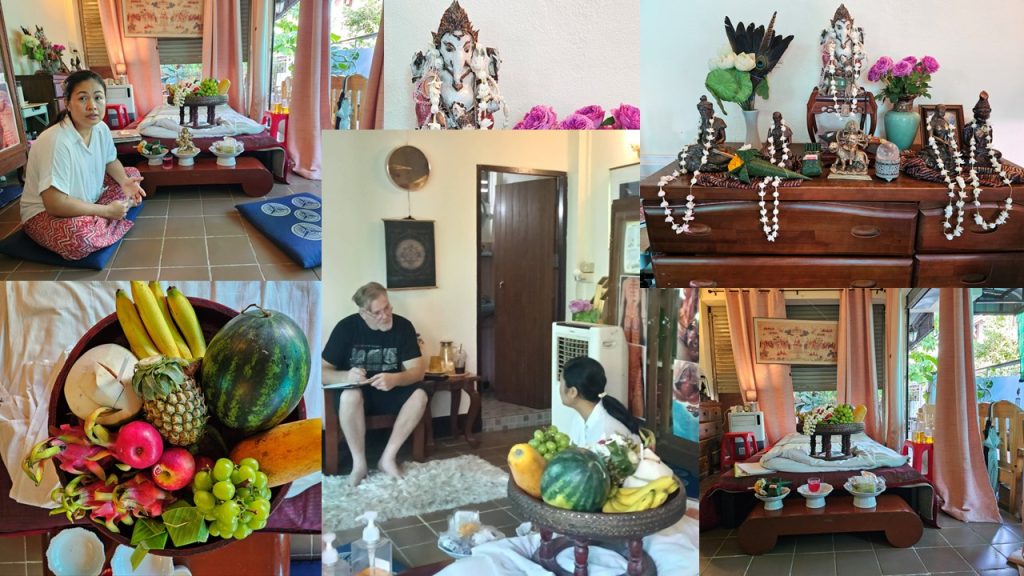
Studying Chi Nei Tsang with Nareena Tawanamai.
Chi Nei Tsang (CNT) is an ancient Taoist abdominal massage Therapy, and its teachings have been passed down mainly through the oral traditions. Chi Nei Tsang literally means ‘working the energy of the internal organs’ or ‘internal organ chi transformation’. In essence, CNT is a form of energy medicine using healing intention and deep abdominal massage. In his book, Healing from within with Chi Nei Tsang, Gilles Marin (1999) likened CNT to an internal form of Feng Shui where a field of energy and information is created at the core for deep healing to take place. He also explains how CNT is applied Chi Kung. CNT is founded on the indispensable notion of self-cultivation – which is central to everything.
Traditional healing theory would explain, in simple terms, that its beneficial effects will occur as energy blockages are removed, and energy excesses calmed. Anatomically and medically, we can all appreciate how the abdomen is a core of the body and that it houses and protects many of our vital organs and that these are responsible (either fully or in part) for digestion, absorption and assimilation of nutrients, urinary and faecal waste production and elimination, a multitude of metabolic and immune functions, and reproduction. The abdomen is also a crucial neuroendocrine centre, and indeed is a well-recognised seat of nervous energy – especially when we think about stress and relaxation responses. Structurally, the abdomen has a mass of superficial and deep musculature which provide a level of protective flexible walling rather than bony protection. The myofascial system here provides essential function, including postural support (for stability and mobility), limb and torso movement, and breathing assistance. A touch more specifically, the musculature in this region help regulate internal abdominal pressure, which is dynamically critical for forced exhalation, coughing, urination, defecation, and childbirth. The abdomen must also accommodate organ size changes during eating and drinking, and more obviously during pregnancy. As highlighted, the neuroendocrine activity in this area is high; the sympathetic (‘flight or flight-type’ responses) characteristically close down digestive and other homeostatic processes, while the parasympathetic nervous system (‘rest and digest’) dominates when the mind and body are becoming calmer and more harmonised. We can all see and feel the effects of (short-term) sympathetic dominance (increased heart rate; increased breathing rate); if this becomes a chronic situation (a stress-state), we can experience poor health due to increased anxiety, body tension, insomnia, impaired digestion, emotional disturbances and restlessness. There are several major nerve centres (autonomic plexi) in the abdomen assisting in the regulation of involuntary functions of organs. Of these, the celiac (or solar) plexus is the largest, located at the upper posterior abdomen adjacent to where a number of major arteries branch off the aorta (the largest and most central artery).
Traditionally, orientally, and energetically, and in relation to abdominal therapy, it is important to consider the concepts of chakras, energy lines, the dantian, and also the concept of Tantra. Whilst teachings vary greatly (and certainly on the internet), a broad consensus might explain chakras as being primary energy centres in the body. They have been described as ‘spinning wheels’ (‘chakra’ in Sanskrit) of energy. Conventionally, there are said to be seven notional main chakras, but this notion cannot be considered absolute (Pascale, n.d.). Energy is said to be accumulated, transformed and regulated at the chakras. Energy, Sen or Meridian lines, by contrast, are invisible, vital energy pathways which circulate the regulated (or dysregulated) energy to all parts of the body. All of this – in this traditional medicine – is considered vital for organ health and function. A simple working system analogy can be considered, where chakras are seen as the main power substations (energy hubs), and the meridians or Sen are the power lines distributing the electricity (energy, Qi, Ki, Chi, Prana or Lom Pran – depending upon the spiritual, geographical and healing tradition) to every house (organ and tissue). The seven (conventionally recognised) chakras are:
- Crown chakra: Sahasrara
- Third eye chakra: Ajna
- Throat chakra: Vishuddha
- Heart chakra: Anahata
- Solar plexus chakra: Manpura
- Sacral chakra: Swadhisthana
- Root chakra: Muladhara
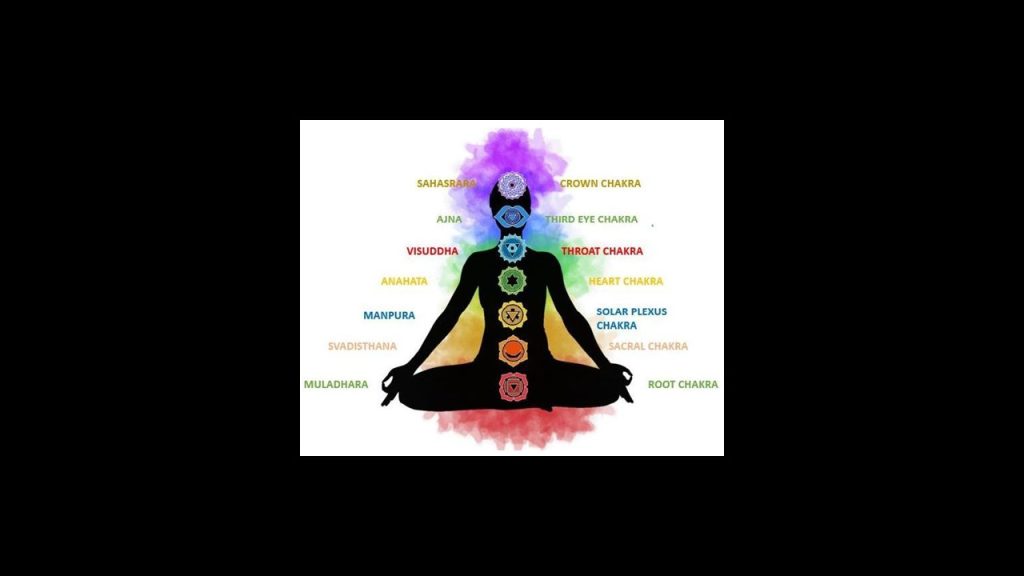
A diagrammatic presentation showing the seven (conventionally-recognised) ‘chakras’ (Somanadhapai et al., 2022).
In oriental medicine, there are also three dantians which are said to be energy reservoirs (stores). The upper dantian, is located at the forehead between the eyebrows (also known as the ‘third eye’); the middle dantian is at the level of the heart; and the lower dantian is situated at the lower abdomen (called hara in Japanese). Collectively, these are known as the ‘triple burner’. There is great emphasis in Traditional Chinese Medicine (TCM) – and therefore also in Tai Chi, Qigong (Chi Kung), and Taoist Yoga – for using therapeutic techniques, including massage, acupuncture, moxibustion, deep diaphragmatic breathing, and exercise movements to cultivate calm and stability, and a centring of energy here. So, the abdominal region is a major energetic centre for the body, and the seat of the ‘hara’ is a core for physical, mental, and spiritual well-being, where therapeutic practices and techniques can work to align the body’s energy, release emotional blockages, and foster a deeper connection to self and purpose. This approach promotes conscious awareness, grounding, clarity, and potentially powerful manifestation.
The word tantra has long been associated with advanced aspects of yogic and therapeutic practice, but has also gained a level of sensational stigma in recent times for sexual connotations, but this aspect should be viewed as one small (symbolic and advanced) branch within a larger system of practice. In Sanskrit, tantra translates as ‘to weave or compose’ and ‘to transform’.
“Today, 200 years of shifting interpretations have left many misconceptions about what Tantra is, or what it actually involves. Tantra is not independent of Hinduism and Buddhism but has pervaded and transformed both traditions from its inception. As a worldview, philosophy and set of practices, Tantra is as alive as ever.” (Ramos, 2020)
Tantra is a huge topic in itself; and it is a challenge to present something worthy beyond what I have learned so far. At its core, tantra is the study and practice of transformation through energy, consciousness, and direct experience. I like how Sarita (2024) explains that “Tantra is a sacred tradition that honours the divinity within each of us and all aspects of the human experience…”
According to Berzin (n.d.):
“Far from having anything to do with sexual activity or mysterious rituals, tantra proposes a highly advanced and complex system for awakening our full potential. Tantric practice is not to be taken lightly; when we actively participate in the ritual, we’re committing to uphold the vows for the rest of our lives. For this very reason, we should only commence the practice of tantra once we have a solid foundation in the tenets of Buddhism, but in particular universal love and compassion for all beings, and a good understanding of voidness. For advanced practitioners, tantra is like a nuclear bomb for the mind. If correctly practiced, it destroys the ego and self-cherishing mind, and rapidly brings the practitioner to enlightenment, where they can be of incredible and long-lasting benefit to all limited beings.”
In my CNT training, Nareena discussed Buddhist principles, as well as touching into tantra and shamanism. It was not necessary to attempt greater teaching of this during my short time with her. I would like to mention that I have been magnetically drawn to nature-based, traditional and cultural spirituality, philosophy and healing practices since my early adult years, and I employ core aspects of these in my daily life – I am generally known to be a calm and considered chap – but I am no world authority on any of it. It would be so conceited of me to think otherwise. Nareena did emphasise the importance of immersing oneself into experiencing the practice, rather than undertaking any initial deep theoretical study.
Nareena herself had been taught CNT by a highly-regarded shamanic master healer – Khun Ni (full name Banjong Lukphai). Khun Ni had also trained under the well-known Taoist Master Mantak Chia. The shamanic experience in this therapy is characterised by the spiritual rituals, the environmental atmosphere, the incense, candles, warmth and comfort, and the breath-focused trance-like state in which techniques are applied. The healing intention demonstrated was immense. Bad energy was being found and moved (removed) and good energy was being imparted and generated. There was an emphasis on respecting the sacred nature of human life, and in particular that of sacred masculinity and femininity, which is relevant given the relative intimacy and trust requirements of CNT therapy.
The training I experienced with Nareena felt special. She is a Thai national, but has spent several years and undertaken much education in the USA, hence she is fully fluent in English, which is not always the case for traditional massage teachers in Thailand. She was keen and focused to discuss the seriousness of the CNT therapy, and to show me the rituals and incantations that fortify the practice. She would visit market early in the morning to bring fruit and flowers so that we can pay respect to the teachers, past and present. This wai khru ceremonial convention is explained eloquently by the highly regarded western teacher of TTM, and founder of the Thai Healing Alliance International (THAI), Bob Haddad:
“The Thai word ‘wai’ means ‘respect’; it is also the name for the common gesture of bringing two hands together in prayer position while slightly bowing with deference toward the receiver of the action. The word khru is a Thai language adaptation of the Pali/Sanskrit word ‘guru’. So, wai khru literally means ‘respect teacher’.”
The wai khru is not unique to practitioners of Traditional Thai Massage. Throughout Thailand, people perform wai khru ceremonies that are specific to individual jobs and ways of life. Schoolchildren gather in schoolyards and classrooms to recite a wai khru to thank the Buddha, their parents, and their school teachers. Graduation celebrations for any type of study or discipline always include a wai khru. Muay Thai kick boxers perform ceremonies that feature a dance to honour their teachers and the ancestral teacher and founder of this martial art. Musicians, performers, doctors, and soldiers all perform wai khru ceremonies. Although each of these may involve the recitation or chanting of different prayers, all pay homage to the Buddha, all include offerings of flowers, incense, and candles, and all invoke the intercession of a higher power in order to carry out a specific deed or action with respect, clarity, and integrity.” (Haddad, 2013)
As part of the ceremonial process, Nareena would ask me to take garlands of jasmine flowers and other offerings to the figurative deities and ancestors on her altar (the ritual stage). We would light incense and candles before the sessions and pour water (gifting ceremony) to the trees outside after the sessions. Everything about this is about raising conscious awareness to the purpose of the practice and for the traditions that have led us to this. In terms of offerings: jasmine flowers represent wisdom and healing knowledge; incense represents reputation (which can travel far); candles represent light, and lightening your way through any darkness; fruits represent wealth (in its various forms – money, health, friendships, security); and other gifts like desserts remind us to not take life too seriously – and even the masters might have used tobacco (it is not uncommon to see food, drink, flowers or tobacco placed on a Thai spirit house (miniature temples positioned outside many homes, business’, schools, and in public areas – these are known as san phra phum). It is said that spirits are everywhere, and that most Thai people go out of their way daily to keep them happy.
Crypsis (2004) explained nicely how:
“Shamanism and animism fit in perfectly well with a Buddhist view of higher reality, in which the physical form is really an illusion and the energy body – the spirit – is the reality. Life in the material dimension, then, is a process of purifying the body and mind so that the spirit can more brightly shine, leading to a better, more aware incarnation in the next life and eventually to enlightenment, in which you are no longer part of the cycle of birth and death.”
So, the abdomen is the ‘front of the back’, as it were; and arguably, the ‘back’ musters far more attention in the field of (Western) massage therapy than the ‘front’. During my time as a therapist, I have been taught, have taught, and have provided (sports, Swedish, and also oriental-style) abdominal massage, but I have also, as a result of my recent time in Thailand, recognised that I must give this area much greater consideration.
What might be some of the primary (western medical) indications for abdominal massage, or indeed the energy imbalances as considered in Chi Nei Tsang?
- Digestive constipation
- Bloating and abdominal discomfort
- Irritable bowel syndrome
- Nausea
- Nervous anxiety
- Breathing difficulty due to diaphragm tightness
- Low vitality, general physical fatigue and depleted energy
- Post-illness recovery
- Headache
- Urinary or reproductive issues
- Menstrual cramps
- Muscular strain (or undesirable myofascial tension) (muscles include: rectus abdominus; internal and external obliques; transversus abdominus; iliacus; psoas; diaphragm)
Everything listed above can obviously have a host of causes – poor diet, sedentary lifestyle, physical overwork, psychological distress, infection, lack of sleep, sport or work-related injury, insidious illness, to name a few. I think it is easy to see how acute or chronic disturbances in the abdominal region can lead to other disturbances elsewhere in the body; and therefore, it is logically reasonable to understand why traditional medicine places such importance on the area.
In CNT, the focus is on a precise abdominal massage. As with any treatment, it should be preceded by a health consultation (and client suitability decision). CNT is not suitable for persons who have had recent abdominal surgery, nor is it practiced during pregnancy or menstruation, or for those who use an intrauterine device for birth control. Other standard contraindication and precautions are also applicable (especially the consideration of any red-flag signs). Clients should not have eaten a large meal beforehand, and no food at all for around two hours before. A foot bath is a commonly performed feature in the majority of Thai therapy centres. This sets a scene, and, along with the wearing of surgical gloves, sends a positive message to the client of trust, cleanliness, safety, and permission (respecting boundaries). Following all the ceremonial rituals and environmental set-up, a short sequence of flowing, pressing, stretching, rocking and general warming TTM techniques are applied to the feet, legs, pelvis, back, arms, shoulders, abdomen, thoracic cage, neck and head. This is to ease and tune-in both the therapist and client to the session and each other, and to promote the movement of energy.
Once the client is prepared, warmed and relaxed, a sequence of specific techniques are performed to help balance the abdominal organ system, including the lower diaphragm, stomach, liver, gall bladder, pancreas, spleen, intestines, and uterus, as well as all the muscular and connective tissues, the urinary system, the abdominal nervous, vascular and lymphatic system, and essentially, the client’s underidding emotions (which can easily include feelings of guilt, anger, worry, fear or nervousness). Interestingly, alongside the consideration of food digestion (and everything that this entails for good health), we should also think about the concept of emotional digestion. How well can we process our emotions, and how emotionally intelligent do we need to be? And how much can our negative emotions affect our organs and general health and well-being?
In my CNT training, after gentle and careful abdominal palpation (assessing, and seeing and listening to this region of the body here, through the hands) the treatment process was broken down into three main segments. First, treatment would focus on the right side of the abdomen for perhaps 15 or 20 minutes; then after a short break, another 15-20 minutes on the left side; then after another short break, another 15-20 minutes or so on the lower and more central aspect of the abdomen. The session is best completed with some further gentle general body massage techniques and a head and neck massage sequence. Then, once up, dressed and seated, as is usual, a glass of water or warm jasmine tea is then offered during the client’s return to a more alert and wakeful state.
Each component of the treatment was begun and completed with gentle, calming, flowing stroking and kneading movements, and ‘cat walking’ pressures to the local area of focus; massage oil is used in this therapy (in this case, 65% sesame oil, 30% coconut oil, and 5% lemongrass was recommended). The specifics of the treatment incorporated a range of gradually deepening finger and thumb pressures, which were typically sustained for around 30 seconds each, followed by deep vibrations, and finished with a symbolic shaking-off (clearing) of negative energy after each application. Particular attention is paid to the accessible organs, the navel area, and the connective and muscular tissues. There is intention to identify and reduce pain, tenderness, tension and restriction, and to induce warmth, comfort, relaxation and ease. The process can feel uncomfortable at times (pressures are obviously adjusted for each individual), but in my experience it should be tolerable and generally pleasurable, and ultimately lead to overall feelings of restoration and renewal. Gold (2007) provided useful insight in his Thai Massage: A Traditional Medical Technique book:
“The Thai word for abdomen is ‘tong’ (pronounced thaawng), which can also mean belly or stomach. The abdominal region houses the primary organs of digestion, assimilation, and elimination. In the traditional Thai medical model, all the Sen have their origins in the vicinity of the navel. This energetically connects the abdominal centre of the body to all the vital sensory orifices. Deep work on the abdomen invigorates the internal organs, reduces stagnation and congestion, and harmonises the flow of bioenergy on the Sen energy pathways.”
I myself liken the delivery of CNT as a symbolic analogy to the stirring of the cauldron – in this metaphysical pot there are a multitude of ingredients (organs, muscles, vessels), and the magic occurs when they are mixed and simmered (massaged and relaxed). Especially in wicca (a nature-focused, pagan spirituality), the metaphorical cauldron can represent the potential for energetically nourishing our lives, for the transformation of one’s inner state, body, mind and spirit.
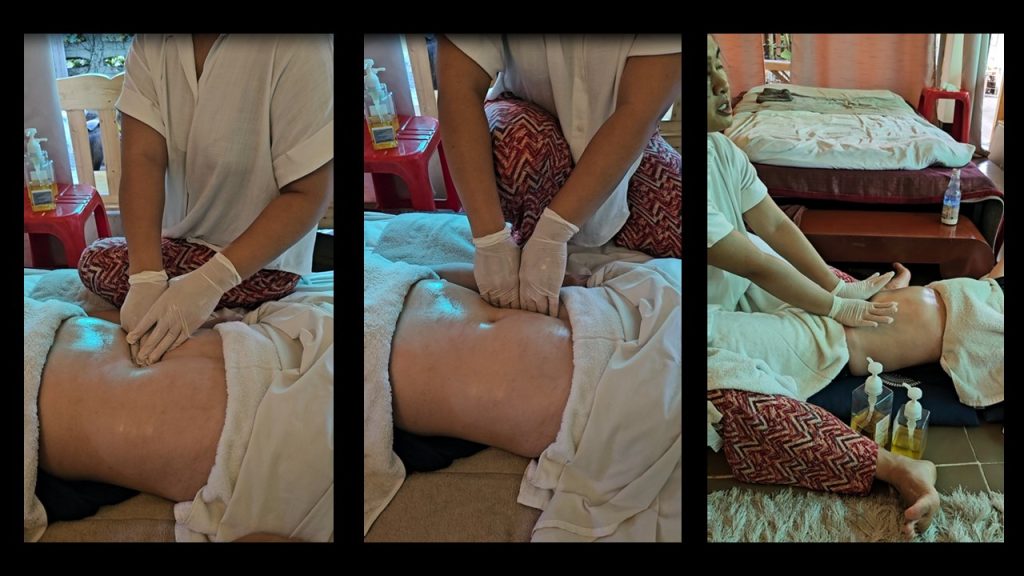
Chi Nei Tsang techniques, demonstrated by teacher Nareena Tawanamai.
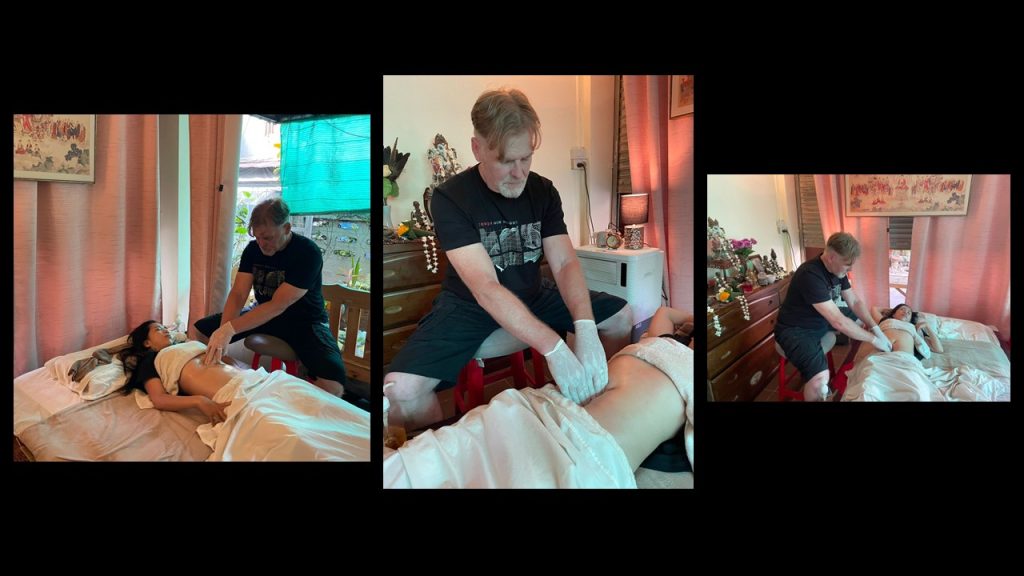
Practising Chi Nei Tsang Therapy.
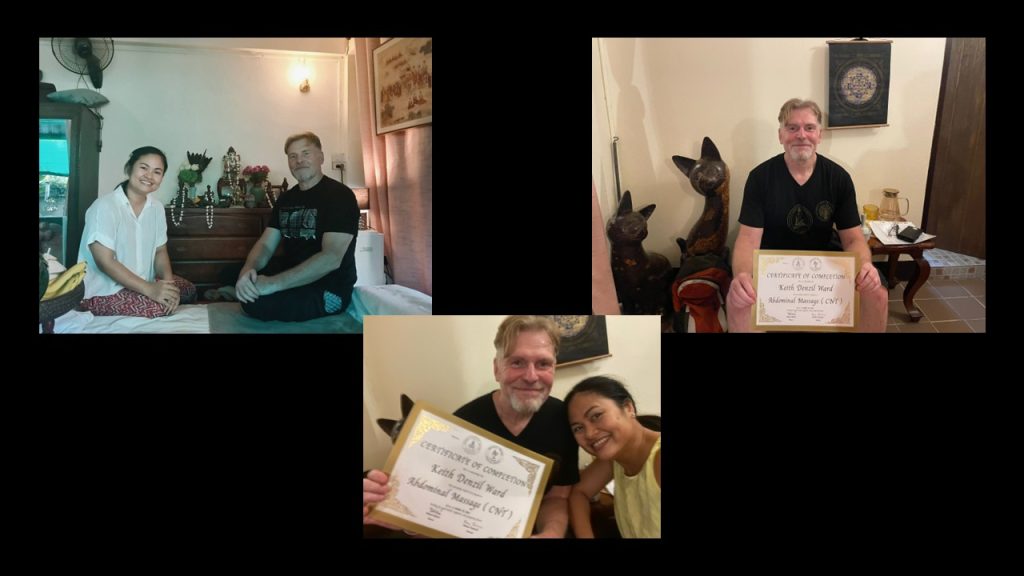
Chi Nei Tsang Course completion.
Overall, the study and practice – and even more, the understanding – of Chi Nei Tsang is not something which can or should come quickly or easily. The basic routine of treatment is perhaps quite straightforward, yet the palpatory connection and communication through intimate touch and the efficient direction of healing intent has surely to be nurtured through highly mindful practice over time. My integrated, holistic abdominal massage therapy has evolved remarkably as a result of my time in Thailand, but my CNT practice is very much in its infancy. I am also aware that there are other practitioners and masters performing and teaching differing approaches, styles and techniques under the generic name of CNT, but I am very grateful for my time spent learning under the guidance of Nareena.
“Everyone studying Chi Nei Tsang will eventually be able to deliver it according to their own personality and understanding. What’s important is not the technique but the principles of healing from which these techniques originated.” Marin (1999).
Tok Sen Therapy
This two-day weekend course, with Warin Carruthers, was based at the Old Medicine Hospital School in Chiang Mai. The history and my overall experiences at this school are described in detail in Part 1. On a warm weekend in Chiang Mai, a small group of us (all experienced international holistic practitioners) were excited and ready to learn about Tok Sen, and get hammered together…
According to Sheposh (2013) Tok is a verb meaning ‘to hammer’, ‘to apply with force’ or to ‘hit’; and Sen is a Thai word for string, thread, cord, or route. In reference to Thai medicine, Sen refers to the energy pathways (routes) running through the human body. I was keen to experience this ancient Lanna Thai healing traditional therapy. The Northern regions of Thailand have, over the centuries, produced a range of folk healing traditions. Tok Sen is not at all well documented in traditional medical texts, and, like many of the methods of the region, has been taught in the oral tradition (teacher to apprentice). As discussed in Part 1 of this blog, there are 10 main Sen lines (Sen Sib). Tok Sen therapy focuses on rhythmic and repetitive, moving tapping along these 10 lines using hard wooden tools – a mallet hammer to strike with and a range of blunt chiselled sticks, which themselves range in size and shape (they may be rounded, wedge-shaped, or more pointed). When struck or tapped, the clashing of the wood on wood and on the surface of the body generates short-lasting localised pressures, very distinctive soundwaves, and this results in deep vibrations being transmitted through the body tissues. It is quite an unusual treatment and experience. Tok Sen therapy is particularly distinguished by its focus on the sounds and vibrations it creates which may then penetrate deep in to the tissues, stimulating neural, cellular and chemical physiology and, ultimately, the energetic channels – which have always been its traditional target.
Sheposh (2013) suggests that the wood used for the tools should be from a tree (preferably tamarind, rosewood or teak) that has fallen naturally, or been struck by lightning (‘thunder wood’), as it is believed that this wood contains more power. My teacher, Warin, brought for us tools that had fallen this way; the wood had been carved by hand and the tools produced in the local region by a craftsman. The tools had also been blessed by monks.
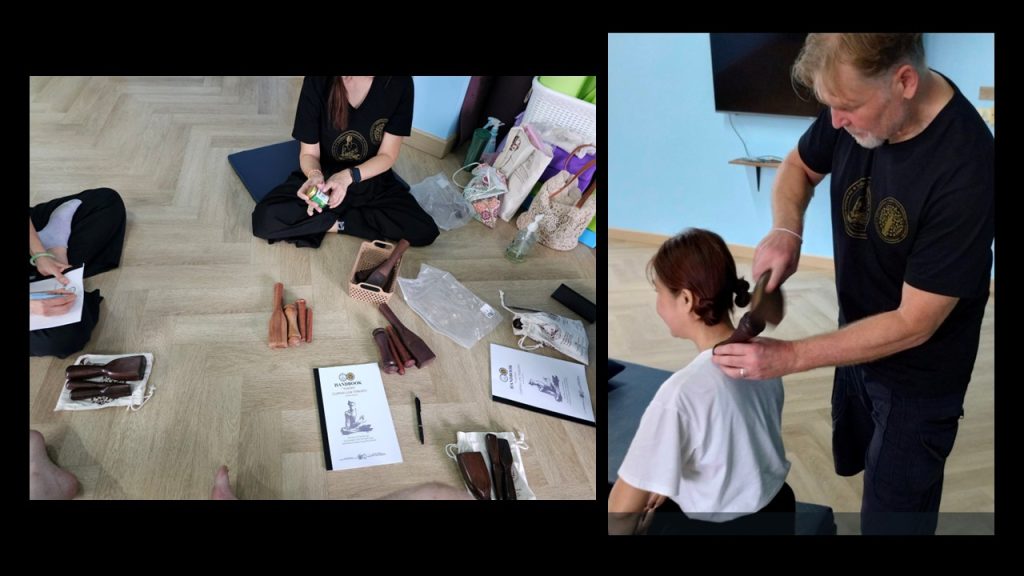
Tok Sen Therapy tools and techniques
Tok Sen massage appears to have great potential for many positive effects, including general relaxation, reduced muscle tension, increased joint mobility, improved circulation, improved respiration, reduction in fatigue and reduction in pain. There is obviously potential for adverse effects if the therapy is not performed with care, particularly in those that may be more vulnerable (e.g., osteoporosis; vascular disorders).
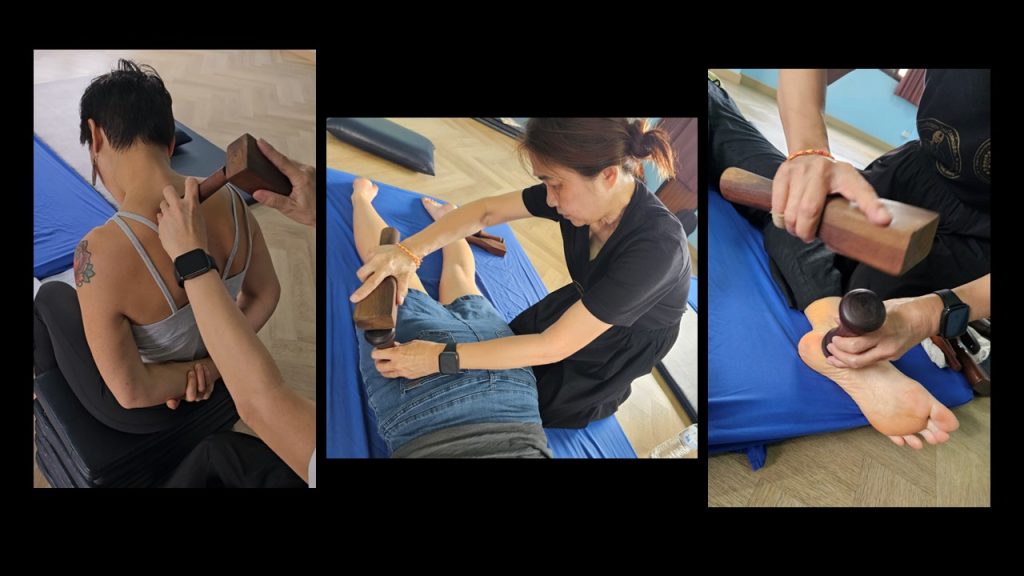
Tok Sen Therapy techniques, demonstrated by teacher Warin Carruthers
The Tok Sen treatment method, like many, may be taught and practiced differently in different regions and institutions. My training taught us techniques to perform in the prone, supine, side-lying (floor-based – although work could easily transfer to the table) and seated positions, and these positionings allow a focus to access the Sen lines and pressure points a per TTM. In terms of tapping (probably a preferable term to hammering!), the weight of tap is not heavy, and great care must be taken to avoid tapping directly on bone or other sensitive areas. The weight of tap must also be adjusted to suit the client recipient. The speed and rhythm can also be adjusted; it seems that there are a range of tapping rhythms (e.g., 1-2-3 on a particular point on a line before moving to the next point; 1-2 before moving; a single tap as the chisel stick keeps moving along the Sen line; or even a ‘horse-trotting’ type rhythm). Warin showed a range of tapping rhythms, she also demonstrated how the chiselled stick can be rotated between each tap, and importantly, how the angle (and size of the contact head) of the chiselled stick can be adjusted to gain best access to the target point. Typically, the fifth finger of the hand holding and moving the tool stays in contact with the body for control, and to assist with ongoing palpation of the correct site.
As might be expected there is a real paucity of research undertaken with Tok Sen therapy. Yankai et al (2023) with a small scale (n=20) randomised protocol comparing Tok Sen against TTM and measured for shoulder muscle pain and upper trapezius muscle thickness among people with shoulder pain. Pain scores, pressure pain thresholds (PPT), and thickness of upper trapezius muscle under ultrasonography were the outcome measures. Participants each received two short (10 minute) sessions of either Tok Sen or TTM. The authors concluded that Tok Sen massage improves upper trapezius thickness from muscle spasms and reduces pain perception and increases the pressure threshold pain among participants who suffer from shoulder pain similar to that of office syndrome. The results were not considered statistically different between the two groups however, which at least highlights the potential benefits for both Tok Sen and TTM.
Another recent but larger scale study by Sansiriphun et al. (2023) examined the effects of Tok Sen therapy on muscle flexibility and relaxation. A randomised controlled trial (RCT) (n=80) had 40 participants randomly assigned to an experimental (Tok Sen) group, and a control group who were instructed to lie down in a comfortable environment (without receiving any massage). Data were collected using a demographic form, a muscle flexibility record form, a relaxation assessment form, an automatic blood pressure and pulse monitor, and a sit-and-reach test station. The results showed a statistically significant difference between the experimental group and the control group in the flexibility of the lower back, hamstring, hip, shoulder, scapula, chest, and arm muscles, and in perceived relaxation. The findings supported the effectiveness of Tok Sen massage therapy in promoting muscle flexibility and relaxation.
Tok Sen therapy can be applied in short bouts as part of a TTM session, but it is perhaps more commonly employed as a stand-alone treatment in its own right. It is usually performed through light clothing or a thin cloth, although some people prefer to have it performed directly on skin, and even with oil. I very much enjoyed receiving and delivering this therapy, and am excited to develop my ability further with the method. I really appreciated the primal, organic nature of the therapy; the hypnotic meditative tapping, the sound of wood on wood, and the vibrations passing through the body – surely there was something therapeutically new and exciting to be gained from this was my thinking. The use of Tok Sen tools may also be more applicable when working with larger or more muscular clients, and also when necessary to help protect the hands of the therapist. During our training, my colleagues and I felt there was clear opportunity to expand on what we had been taught, and we began to experiment with treatment positionings, and also we felt that energy (and classical acupuncture) points could be specifically targeted for particular clients. I think some people will not wish to choose Tok Sen therapy over TTM, simply because there is less hands-on in the approach – but this could be the case wherever tools are used.
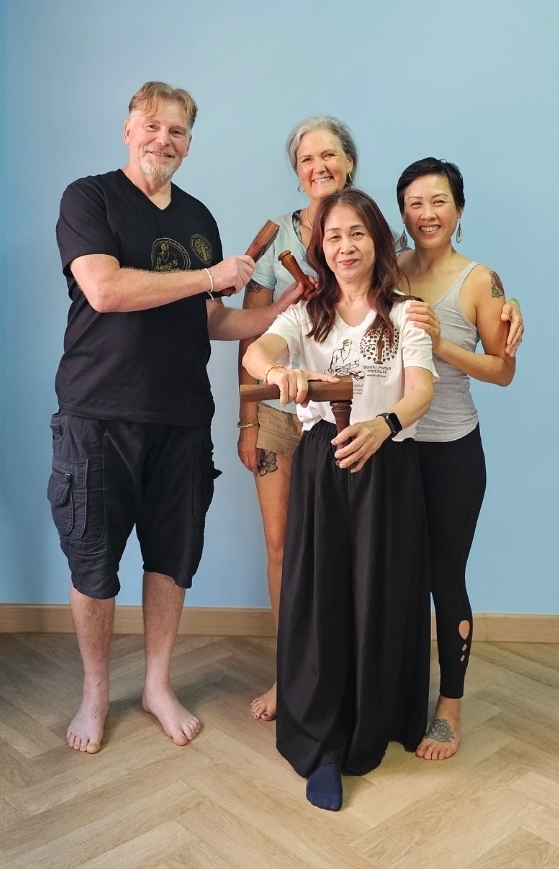
Tok Sen Therapy team!
Pa Khaw Ma Therapy
I am so pleased that I visited Ong’s Thai Massage School, located just to the north of Chiang Mai old city. It is a small independent school, and provides a very welcoming space for learning and collaboration. The entrance garden is beautiful and sufficient for relaxation and rest periods. Inside, there are several teaching rooms, offices, wash facilities, walls depicting the history of the school and pictures of all teachers who have qualified there. There is also a shrine for the daily Wai Khru ceremony (which honours the teachers). My teacher for the day was Jeaw – a highly talented, experienced and beautifully happy practitioner with excellent English; she was keen to explain and show us everything carefully.
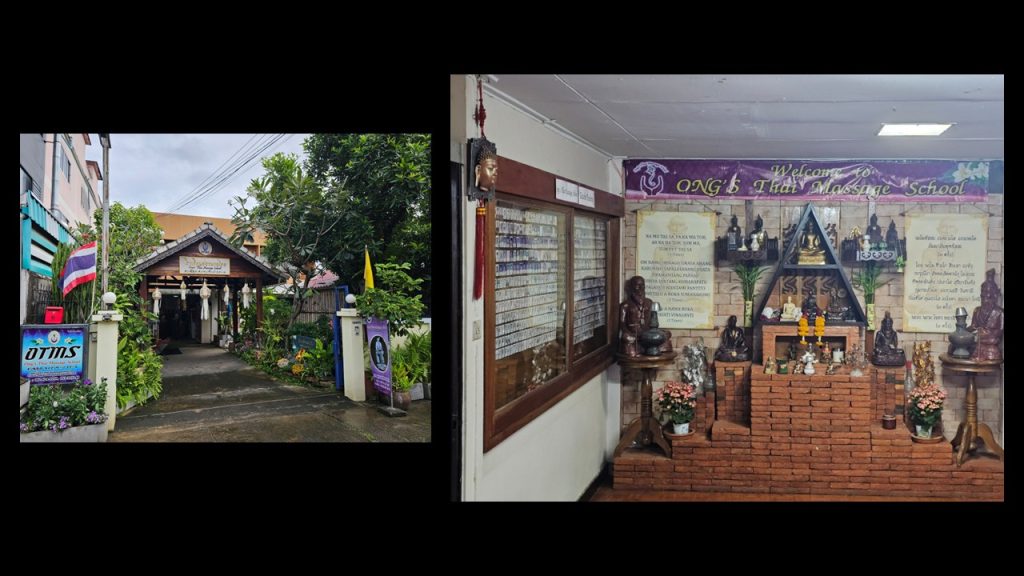
Ong’s Thai Massage School.
Ong’s Thai Massage School – a beautiful mandala.
Pa Khaw Ma (PKM – also spelt Pha Khao Ma), is a truly all-purpose woven cloth. It is colourful, lightweight, easy to clean and dry, and affordable. Traditionally, Thai people would wear it as a sarong, scarf, shawl or head cloth bandana; it was used as a towel, a cradle for babies, a bag for carrying things, as a belt, a curtain, a table cloth, or as a bed sheet. It may be worn to religious ceremonies, and old ones may be used as cleaning rags. Pha khao Ma has a strong connection with cultural Thai life and has been woven from cotton, or sometimes raw yarn, hemp or silk, for household use and for exchange between communities, as well as being presented as a gift for elders (Varapongsittikul, 2023). More recently, it has made its way into fashion items, such as handbags and shoes. The cloth is characterised by alternating colours arranged in a checkerboard style, and is primarily produced in the northern and northeastern regions, but it is available all regions of Thailand – its designs and colours can vary in accordance with the identity of each locality. In 2023, the (Thai) Government Public Relations Department declared that Pha Khao Ma (the ‘multifunctional cloth of Thai life’) was to be inscribed on the UNESCO’s Representative List of the Intangible Cultural Heritage of Humanity, and will join Khon Masked Dance Drama, Nuad Thai (TTM), and Nora, Dance Drama as other aspects of listed cultural heritage.
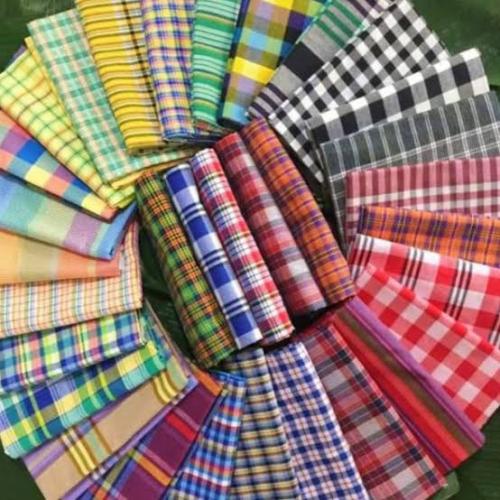
Pa Khaw Ma cloth
PKM massage is a unique ‘dry’ (no oil or balm) Thai massage method that uses the cloth somewhat as an extension tool for the therapist’s hands to help provide deeper stretches and greater leverage for muscle and joint manipulations. It has sometimes been referred to as Thai Wisdom Loin Cloth Massage (although we know the cloth is used for so much more than just covering the loins). In western physical and manual therapy (e.g., Maitland and Mulligan systems), mobilisation belts are sometimes used to help provide improved handling and moving of patients to specifically mobilise joints and body regions; I can see similarities in how mobilisation belts are sometimes used, with some of the techniques of PKM. In western physical therapy, joint mobilisations are normally classified as being active (client performs the movements) or passive (therapist performs the movements), or a combination (as in mobilisations with movement – MWM). Also, manual joint mobilisations may focus on a gross body movement (e.g., knee extension; cervical flexion) – these are known as physiological or osteokinematic movements, and can be performed either actively or passively. In contrast, accessory or arthrokinematic movements are the more subtle joint surface movements available at the body’s synovial (so-called ‘freely moveable’) joints (e.g., medial glide of the patella at patellofemoral joint; posteroanterior glide of the 4th lumbar vertebrae at the L4-5 spinal segment). All sports therapy, sports rehabilitation, and physiotherapy students and practitioners know of this! Such techniques are used to assess the quality and range of movement in clients presenting with musculoskeletal conditions; and they are also often used in treatment.
I really like PKM. It’s great to use, and great to experience. It also reminds me of how creative we can be in working with bodies. We can strap the cloth around an area of the client’s body, press with our feet and pull with our hands. I like the fact that there can be an ongoing, dynamic mix of hands and feet on, alongside techniques where the contact is more indirect through the cloth; this, for me, allows for a touch more objectivity in the ongoing assessment and technique progression during the session. The PKM treatment emphasises both healing and heritage – and, amazingly like the other established therapies developed in this south-east Asian region – it offers a meaningful body and mind journey deeply rooted in Thai traditions. I think that PKM:
- Provides another way of safely supporting, observing and mobilising the body
- Provides a useful addition to Traditional Thai Massage
- Provides a useful alternative to oil massage (avoids the need for direct skin-to-skin contact)
- Improves the potential effectiveness of stretching and mobilising, making advanced stretching accessible and profound
- Is particularly suitable for: people wanting to improve flexibility; people with neck, shoulder, elbow, hip, knee or back pain; older people who might benefit from more supportive techniques; and people who want to receive an easy, comfortable and relaxing therapeutic experience
- Is surprisingly useful and effective.
PKM is usually used working floor-based (on a mat) with the client fully clothed, but it can also be used on a massage table. The techniques will allow for deep stretching, focal traction (to the spine and limbs), rhythmic compressions, and manipulations, and work on major muscle groups. The general strategy is to position and apply the cloth, then mobilise, pull and stretch (sometimes press) and release (typically repeated several times), slowly with careful positioning, communication and feel. I had a great day at Ong’s School, and would definitely like to return.
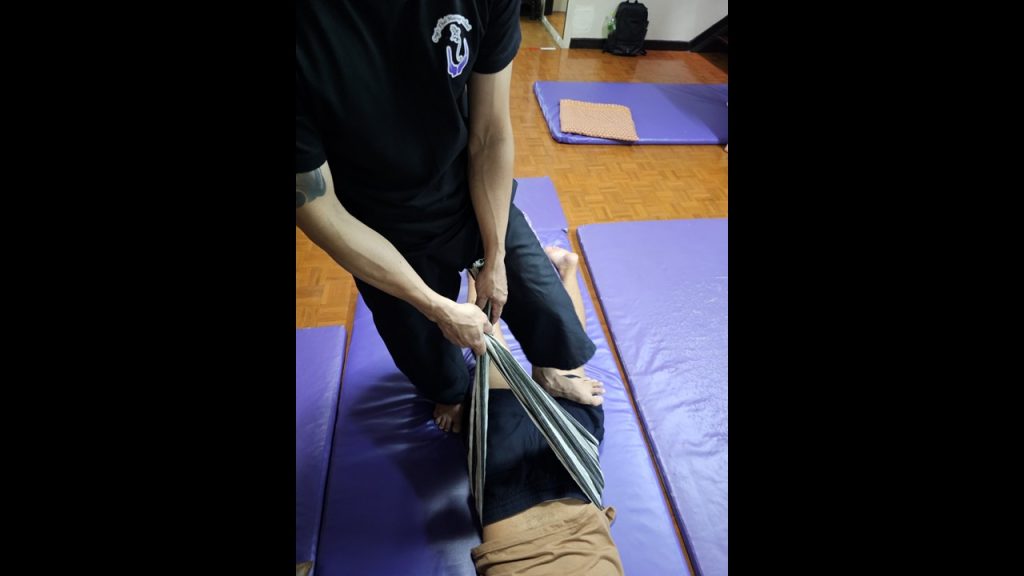
Prone-lying hip and low back stretching with Pa Khaw Ma.
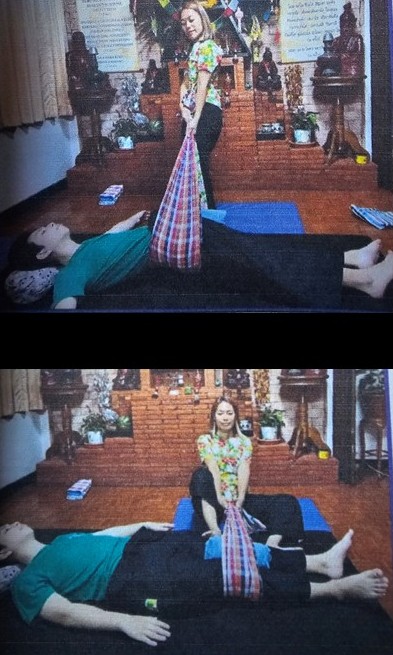
Pa Khaw Ma techniques, demonstrated by teacher Jeaw.
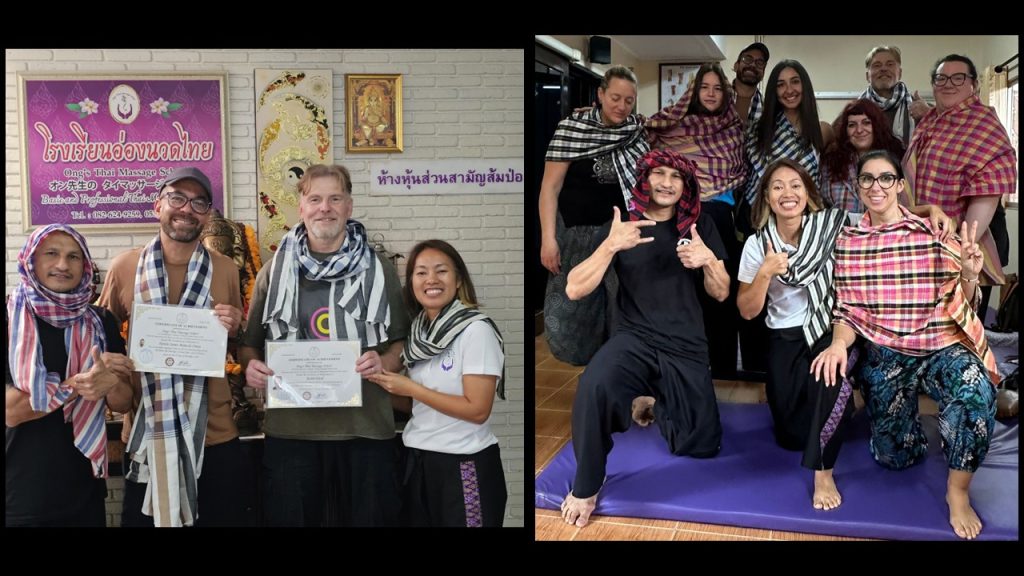
Ong’s Thai Massage School Pa Khaw Ma team!
Bamboo Massage Therapy
Whilst planning my latest trip to Thailand, I was very pleased to find that there was training school with great reputation in Koh Samui (a southern island in the Gulf of Thailand). The Yokthip Samui School of Massage sits just outside the coastal town of Chaweng, and is run by (Kru) Thippy, her daughter Nook, and quite a team of therapists, teachers and other administrators. Like the other schools I had visited in Chiang Mai, here was another school with strong traditional roots, and a very welcoming and friendly environment. I made good friends with the staff and other students over the two days I was there. Inside the entrance, there is a large alter honouring the Buddha and the teachers of medicine. Lots of space for sitting comfortably, a number of rooms for treatments and teaching, plus all the obligatory washrooms and showers.
The Yokthip Samui School of Massage in Koh Samui.
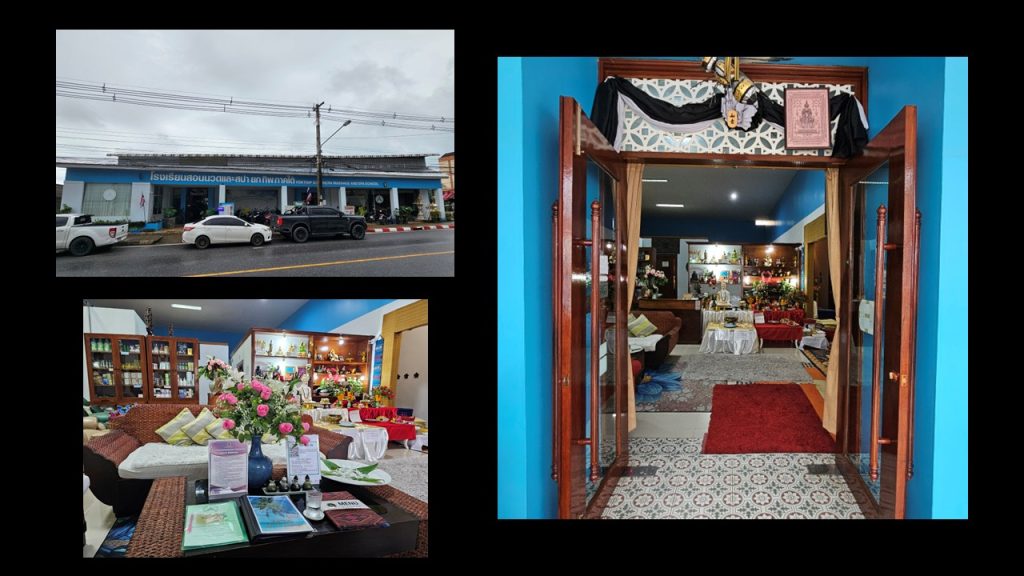
The Yokthip Samui School of Massage in Koh Samui.
For the bamboo massage course, I was honoured to be able to spend a day training one to one with Master (Kru) Opat Jaikwang (informally known as ‘Sam’), whom I have become aware is something of a legendary practitioner – he is in great demand as a teacher in different regions, and has worked with a number of high profile massage practitioners, including Master Suwit (‘Steve’) Sritrairasri (widely known as Master Chaang). Sam most certainly impressed me with his TTM skills, his creativity and attention to detail, his unique massaging style, his happy singing while working approach, and his will to share with me what he could in the time we had. The school provided a model for the day, and we covered some great techniques and routines in oil massage and the use of bamboo.
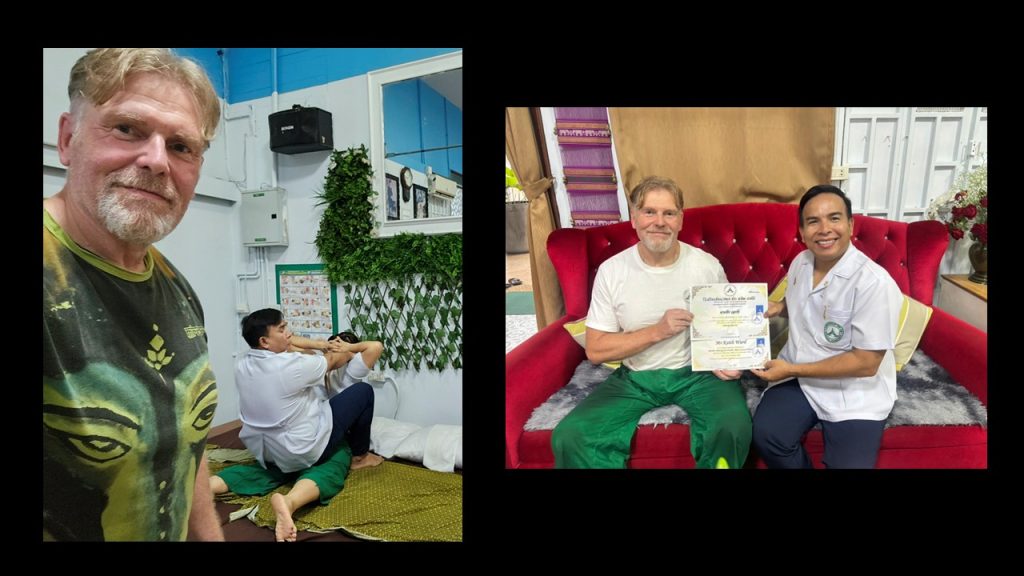
Training with Master (Kru) Opat Jaikwang (‘Sam’).
Bamboo massage is a deep tissue therapy using smooth bamboo canes as tools to roll, knead, stretch and apply pressure to muscle, effectively aiming to release tension, reduce pain and generate relaxation. Sonia Osorio (2008) provided a nice introductory explanation to the therapy:
“Bamboo massage is a technique that incorporates bamboo stalks of varying lengths and diameters to provide deep-tissue work. The Japanese name for bamboo is ‘take’, while the Chinese call it ‘chu’. It is from this word that the cho sticks, used by some bamboo massage practitioners, take their name. The sticks are sometimes heated and essential oils are incorporated into the massage. The massage itself promotes circulation, sensory nerve perception, and lymphatic drainage and provides a deep sense of relaxation and well-being. An added benefit for the practitioner is that using the bamboo sticks helps to reduce stress and strain on hands and fingers while still allowing for deeply penetrating manoeuvres”.
Bamboo, just like coconut or rice, is a pretty ubiquitous and sustainable resource in many Asian regions. Osorio (2008), in her Massage and Bodywork Magazine article, also offered very interesting discussion on the life, growth and structure of bamboo.
“Although bamboo matures fully in approximately seven years, most bamboo flowers only once in 60 to 120 years, with large heads much like those of sugarcane. After blooming, all the bamboo plants of the same species die, which occurs worldwide at the same time. Overall, there are more than 1,200 species of bamboo, all of them related to sugarcane and corn. Bamboo is, in fact, a giant grass: the bamboo stalk can be cut, leaving the root system intact for rapid re-growth. This makes bamboo a highly renewable resource. In a favourable habitat, it can grow as fast as one foot in 24 hours and will grow back to full-size in a few years.
In addition to its sustainability, bamboo is also recognised for its suppleness and resilience. With its unique combination of strength and flexibility, bamboo lends itself to a variety of uses. Because of its hardness, bamboo has been used for bridges, floors, furniture, gutters, masts, utensils, and vessels. Because the fibre is soft and can be finely crushed, it can also be used for clothing, bedding, and towelling. Part of what makes bamboo hard and straight, yet flexible and light, is that its outer cell walls are covered with silica. This creates a crystalline-like matrix, much like that of a quartz crystal of our own connective tissue… (this makes) them wonderfully smooth and silky. This combination of hardness and flexibility makes bamboo a perfect tool for massage.”
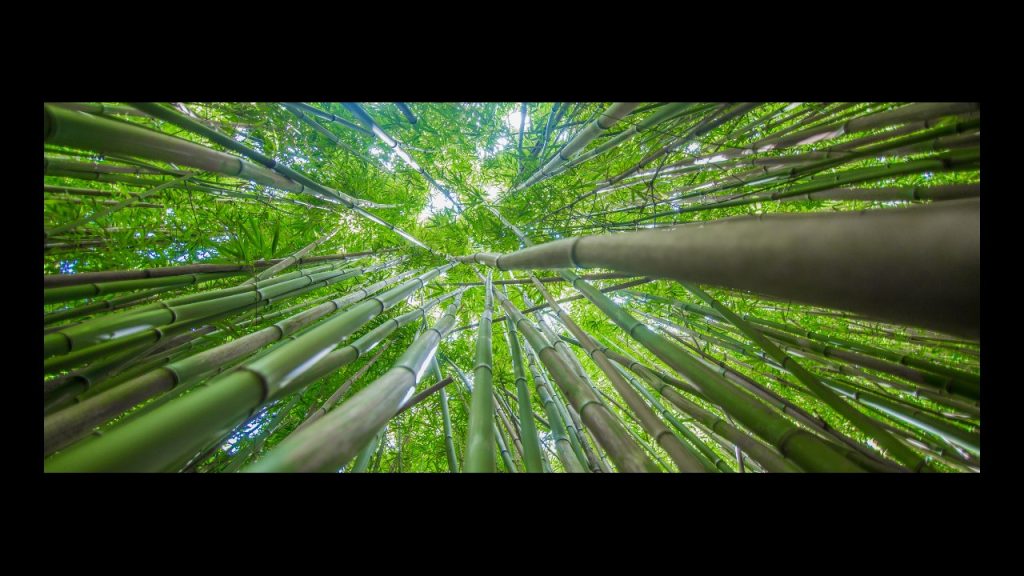
Bamboo grass.
Bamboo usually has a hollow core, however there are species that are naturally solid and don’t have the prominent nodes common to most bamboo varieties; the sticks can also be made from compressed bamboo that has been formed under high pressure, and then shaped and sanded (MBLEx, 2025). Premium bamboo massage sticks are kiln-dried, and also have natural antibacterial properties; they are strong and durable, round and smooth, and should be free from splinters (if splinters are found, they can be lightly sanded). The sticks can be cleaned after each use with a disinfectant spray and wiped down with a damp cloth, and periodic oiling will help to maintain the bamboo’s natural smooth texture and prevent cracking. The bamboo sticks should be stored in a cool, dry place to help avoid any warping; and they should also be inspected for splinters or signs of wear (cracks or discolouration), which would mean they require replacement. Bamboo retains heat very well – it is said even better than the hot stones used in massage; hence warm bamboo (in a purpose-designed electrically heated bag) can be employed as an enhanced aspect to the therapy.
The bamboo massage sticks are hard and straight, and also light. Longer, thicker sticks are used for gliding strokes on the larger muscles, such as the back and thighs; while the smaller, thinner ones are used for more detailed work such as on the neck, hands and feet. Bamboo sticks are useful so as to be able to give a deeper, firmer and specific massage. The stick can be used to sweep and roll over muscle in a similar style to the techniques using hands or forearms – the sticks do seem to offer something more. The strokes can be slow, deep, short and overlapping, or longer and more superficial; sometimes the stick is held to press down into the muscle (longitudinally), and sometimes, one end of the stick is held in the palm of hand or placed on the couch and fixed as a pivoting point, while the other end is moved in an arc over the tissue. Thin and shorter sticks can be used under the palm of the hands to stroke and knead tissue. The ends of the sticks (when held vertically) can also be used to press and rotate into key muscle points. Smaller diameter sticks can be rolled and pressed between fingers and toes. You may have heard of IASTM (instrument assisted soft tissue mobilisation), which is the use of (typically) stainless steel massage tools; or Gua Sha (the historic traditional Chinese version, typically using stone, ceramic or wooden tools). Tools are useful in massage therapy, and have been used for centuries. As when using IASTM and Gau Sha, in bamboo massage the therapist aims to develop their sense of palpatory feel (assessment), response and resonance through the tool. Bamboo massage therapy, I suggest, is (in theory) gentler and easier on the superficial tissues than when using steel or stone. Obviously, there is potential for causing pain during treatment when using bamboo sticks, but when used with care, and when following on from appropriate client assessment, it should be fine.
During my day of training with Sam, we covered all main body areas and treatment positions; we used a variety of techniques (with and without sticks) and we shared some ideas on how to work. We also swapped treatments. It was a great day, I found it very useful and inspiring, and it was fully appreciated!
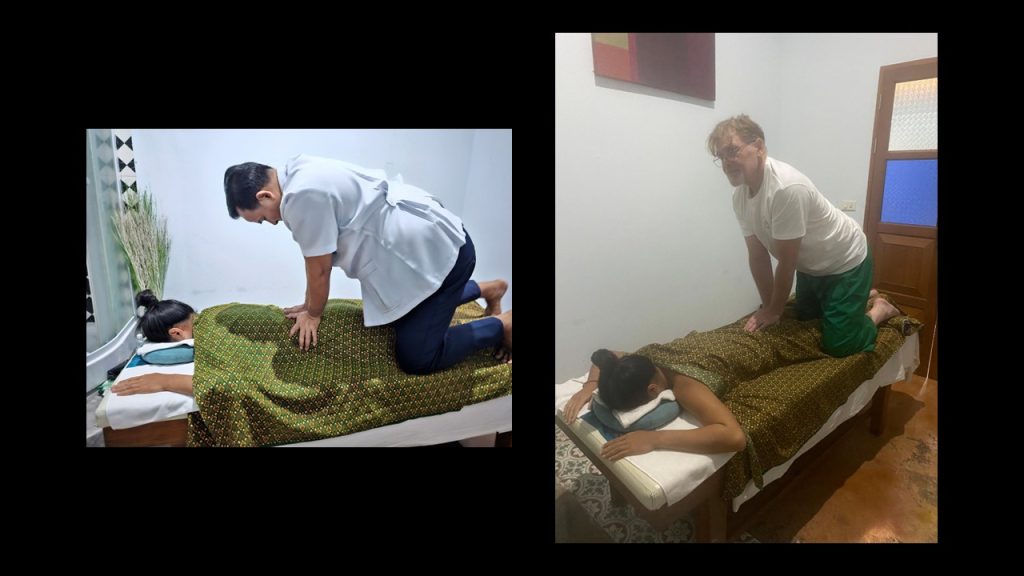
Training with Master (Kru) Opat Jaikwang (‘Sam’).
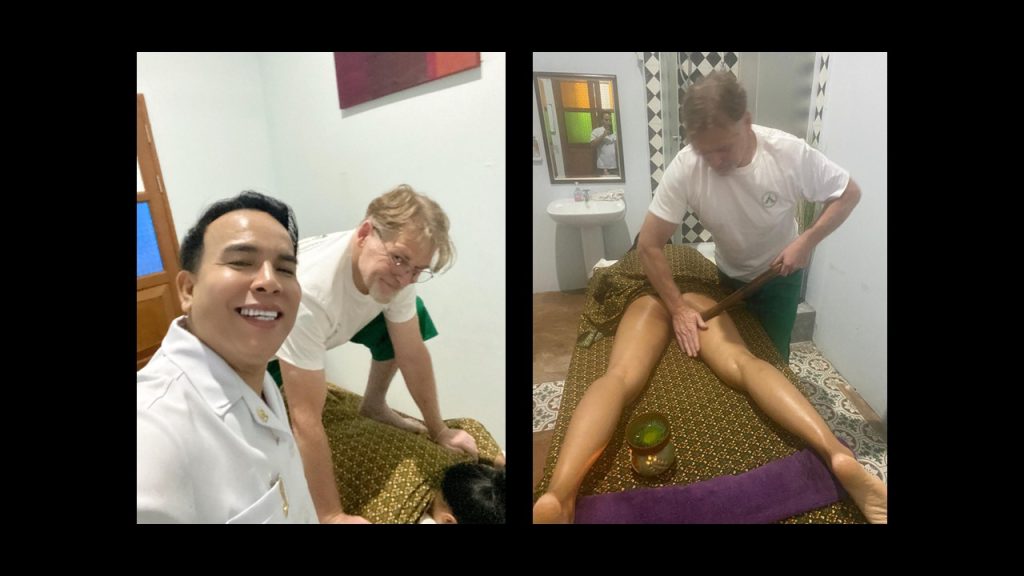
Training with Master (Kru) Opat Jaikwang (‘Sam’).
Medical Massage Therapy
After having had a very enjoyable day training with Sam, I then arranged to have another training day at the Yokthip Samui School of Massage, this time with Teacher Lek (‘God Hand’). Lek is an experienced and clearly dedicated massage therapist. When I first met him, he was keen to show me photos of him treating David (‘The Haymaker’) Haye, the British and former WBA heavyweight champion. Lek told me how he had treated many other elite sporting professionals. His confidence and enthusiasm was infectious, and he was obviously keen to share with me some of his methods, so it seemed a nice idea to organise a day of training. I was also pretty impressed by the statement tattoo on his forearm (see the photo below). For the training day, the school also provided me with another highly experienced and lovely Teacher Kung (Phornphana), who had better English language skills than Lek. The training was called ‘Medical Massage’, but this would have to be placed under the traditional rather than western medicine banner. I felt that the day was more about showing a range of deep tissue, sports and remedial massage techniques for different body regions. Whilst Lek did demonstrate a lot of working palpation, there was little in the way of physical assessment being discussed, and limited explanation of why injuries or conditions would benefit from such approaches. There was also no set routine to follow, unlike most of my other trainings. This may sound negatively critical (I don’t believe it is), but it’s really just my observations and experience.
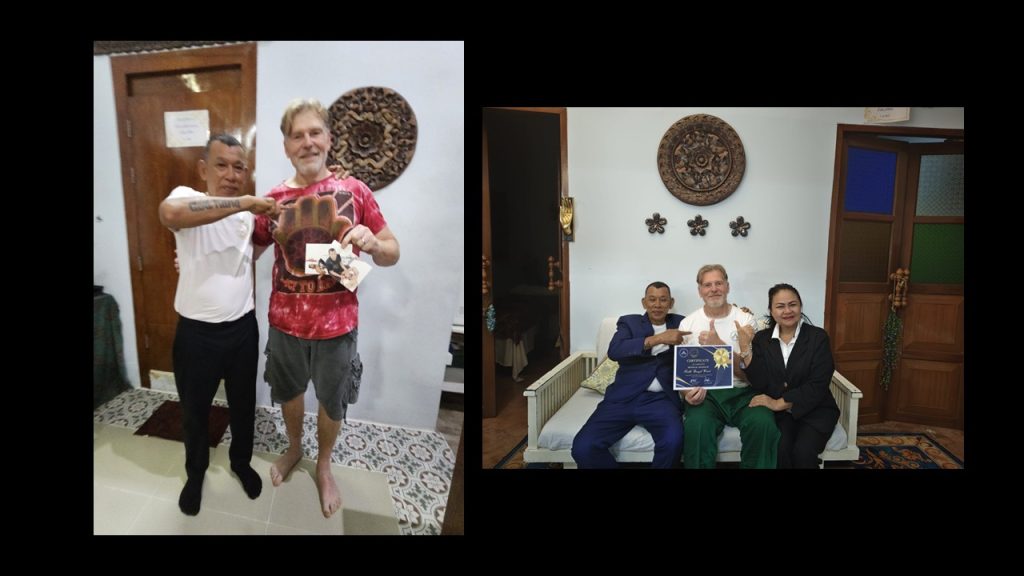
Training with Teachers (Kru) Lek and Kung.
When undertaking training in Thailand – or any other country – where there are automatically likely to be language and cultural differences or barriers, then it is important to accept such things as the premise. In many instances, a training school and its teachers will provide the thirsty (western, foreign) student with the finer, desired details and explanations, the supporting handbooks, the lectures, the Q&A, and perhaps the online resources. In this case, Lek, well-supported by Kung, was primed to work through an array of treatment techniques for different body regions (as we agreed at the start of the day). I think they recognised that I am pretty experienced myself, and that this was what I wanted. To be fair to them, and the school, I was more than happy to be shown, and share myself, a big bunch of techniques – for this training day, I didn’t need or want anything over-complicated.
Lek has some great techniques up his sleeve. He was very focused on showing many of the key points on the Sen Sib energy lines and using massage techniques to treat these, relevant to each musculoskeletal region; and he employed a range of interesting treatment positions (for both therapist and client). It was an honour and privilege for me to spend a whole day doing this with such lovely people. It was more like a nice and useful practical workshop with experienced friends. We shared many techniques and approaches; and as we went along, they were keen to hear more about the anatomy of the regions from me.
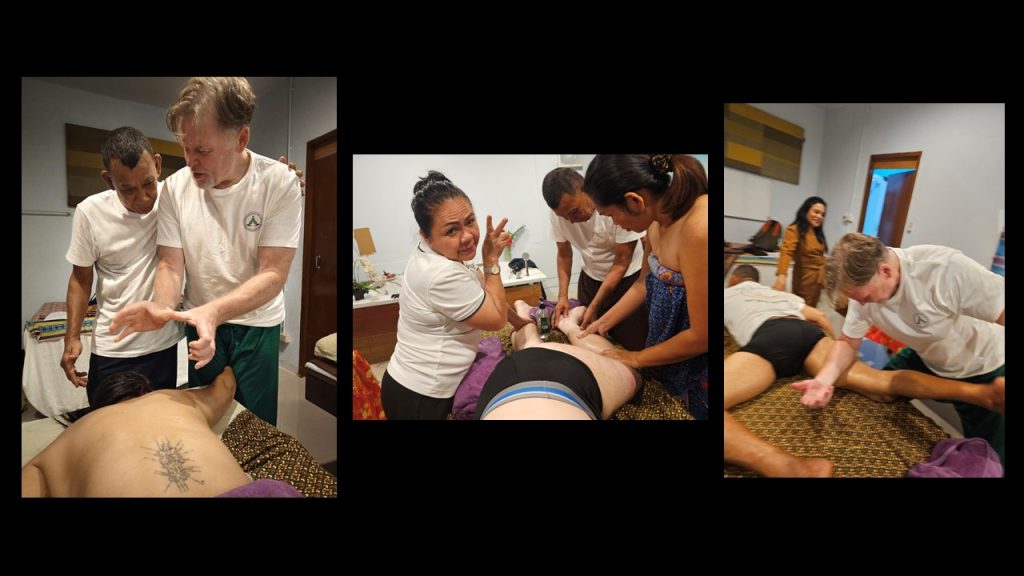
Training with Teachers (Kru) Lek and Kung.
Thai Cookery Class
Most people know something of Thai cuisine – whether you prefer a Pad Thai dish, a yellow, green or red curry, or a dessert of mango sticky rice with coconut cream – the food is one of the great reasons why people want to visit Thailand – whether it be street food, local café, or fine restaurant. Probably my two favourite Thai dishes are Massaman Curry (a smooth, creamy, slow-cooked savoury-sweet chicken dish, served with either rice or roti), and Khao Soi (a northern, spicy, double noodle broth-type dish).
So, my wife Angela and I were keen to attend a cookery class on this trip (it’s a popular thing to do). Ours was at a traditional family-run Go Samui Cook cookery school in the hills of Koh Samui. As might be expected, the primary food chain in Thailand is hearteningly unprocessed – the time from garden, farm, river or sea to plate is short. Freshly-cooked, colourful, tasty and nutritious food is commonly the order of the day. It can often be thought of as spicy (‘phed’ pronounced ‘pet’) or not spicy (‘mai phed’) depending on your preference. I have often thought that in places like Thailand, where people are naturally resourceful and creative, there is a craftsmanship to the things that contribute to make the culture so great. Making food with local ingredients, making crafts from wood or recycled metals, playing music (whether traditional Thai, or wonderful Thai interpretations of western music), or performing Traditional Thai Massage – these are all obvious examples of a culture that can do seemingly very simple things extremely well.
For our cookery day, we learned about many of the local resources (coconut; fruits and vegetables; herbs; spices; fish), and the traditions that have evolved to create the cuisine. During our class we prepared and cooked four dishes and ate them in two sittings: seafood (seabass) soup with coconut milk; deep-fried chicken spring rolls; stir-fried chicken with holy basil; and sweet corn with coconut milk dessert. I was very impressed that we were able to cook these four authentic dishes – they looked and tasted great. I am no chef, so for me this was more of a lesson in what it takes to prepare such food, and it only heightened my respect for the people working in Thai kitchens.
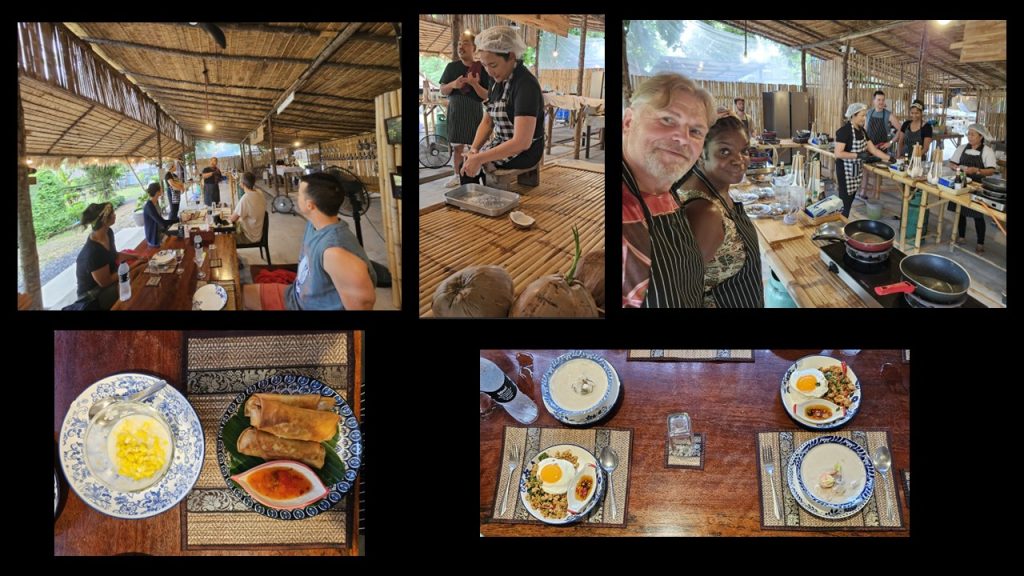
A day at Go Samui Cook cookery school in the hills of Koh Samui.
Mauy Thai Class
I have to confess to never having tried boxing or kick boxing, let alone Mauy Thai. I did dabble with Aikido many years ago, but I have to confess that I was always more comfortable with the slower choreography of Yoga and Chi Kung. Having said that, I knew I wanted to challenge myself this time in Thailand and that a Mauy Thai session was going to happen. So I booked myself in with Instructor (Kru) ‘Boss’ at our hotel in Koh Samui. A very nice, young guy, Boss had history as a decent Thai boxer, but he unfortunately suffered a bad spinal injury during a fight (following a body kick) a couple of years ago which required significant surgery. He has made a good recovery following surgery, and was now back to training and instructing. I would have to say that his instruction was perfect for me; within 90 minutes I was in the ring – albeit working with pads rather than sparring – and he taught me a lot. We covered warm-ups, adopting a balanced stance, essential footwork, the four basic punches (jab, cross, hook, and uppercut), and kicks, and fundamental defences (i.e., high forearms; basic blocking with high knees). Then we were able to put all of this into some dynamic pad-work practice in the ring. It really was quite an experience for me; I loved the intense workout, and learning some useful self-defence. This is something I would like to do again (I think best in Thailand, in the warmth and with the experts) – in the meantime I will start to incorporate some punch-bag and shadow boxing work into my home fitness sessions.
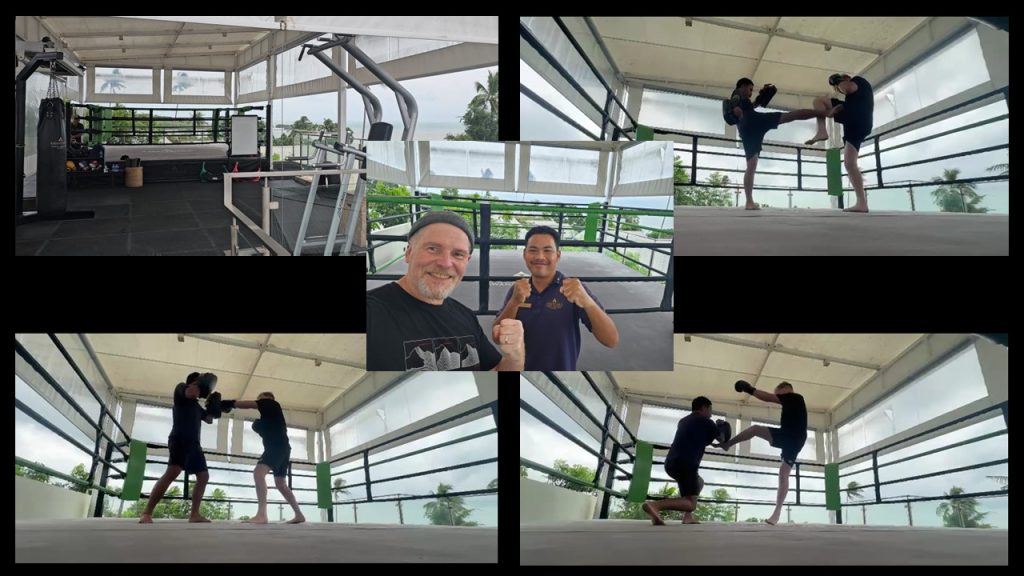
My Mauy Thai class with Teacher (Kru) ‘Boss’
Integrating Traditional Thai Massage Therapies into a UK-based Practice
Bob Haddad (founder of THAI) was convincingly dismissive of the need for integrating TTM with other methods. He even described much of the current‐day hybrid fusion as ‘confusion’, when new techniques and concepts from other traditions are presented and marketed as ‘Thai’. In reflection, Haddad did also, however, respect when teacher-practitioners are honest from the outset and should clarify when any non‐Thai therapy techniques and traditions are used within Thai massage. For the continuation of the purity of the Thai tradition, is it essential to not misrepresent it.
“Thai massage is not a part of Ayurveda, Chinese medicine, yoga, or any other Eastern or Western tradition, and elements or interpretations of those systems cannot be injected into Thai massage without distracting from its purest intent and reducing its ultimate effect. I feel that there is no need to integrate concepts and techniques from other systems or modern inventions into Traditional Thai Massage. Doing so does not make Thai massage any more effective. In my opinion, it only confuses and dilutes it, and in some cases, it elevates the egos of those who practice, thereby desensitising their work as therapists. Thai massage is already a complete, wondrous and amazingly efficient system, and it operates at its most efficient level when it is carried out through the lens of traditional Thai medical theory, and with a direct connection to the Buddhist principle of metta, or loving‐kindness.” (Haddad, 2020)
I understand and agree with the purist principles Bob Haddad stands for – but, I also believe that a contemporary flexibility in practice and thinking can be developed. TTM is complete as a therapy, but I am not sure that it must always standalone – and I am also sure that it is not a panacea. By comparative extension, should (evidence-based) western medicine exist and progress without more personalised and holistic therapeutic integration? We can’t stop the world from turning…
I cannot help but have a western scientific, medical mindset – the west is where I live, learn and practice. But I have also always had an inquisitive mind and have quested in my search for things that may seem to many as being different to the norm. I believe in growing the connection with nature, the universe, and with ourselves and others; and the energy concept makes so much sense in this regard.
Future Study and Practice
In order to follow a pure TTM path requires a devotion to that journey – and a focused motivation to delve deep into the spiritual infrastructure and the cultivation of a creative practice of the art. I am merely an ageing, somewhat experienced, and still enthusiastic UK-based holistic sports and exercise therapist (perhaps for want of a better working title) who wishes to continue to improve myself, and to uphold and respect the healing traditions I elect to employ. So, I think perhaps realistically, I’m unlikely to become a Master (Ajahn) of TTM; but I do always hope to become a more experienced and better practitioner. I have certainly found, since returning from Thailand, that I have been able to incorporate some of the newly learnt techniques into my general practice with great success. My regular clients have loved it, and I am excited to keep on developing. I feel that my practice has received an incredible injection of inspiration; I am certainly also thinking differently about how I can best help people with their aching back, knee or ankle pain, their impaired digestion, their recovery from illness or the management of their long-term neurological condition; and I keep thinking more about the energy. This for me is a quite striking revelation, given that I have been in practice now for 30 years – I have also taught at university for many years, written several heavy duty textbooks, and I have been consistently committed to learning and developing. Perhaps a key lesson, in my thinking, is to remember that it’s always good to remain true to the roots. I know I am working even more now with pure holistic intention and strategy.
Sometimes we (the royal ‘we’ – the ‘majestic plural’) can all be a little misguided or underinformed (and certainly some more than others). We can find ourselves doing things or saying things, that in reality we are not necessarily qualified to do or say (and I don’t mean that in the formal ‘qualification’ sense). In other words, ‘we’ don’t know everything about anything; there is always more to know. Any expert should really have the humility to declaim their expertise. The wise will still make more opportunities than they find (paraphrased from the realist artist Francis Bacon); Socrates said something along the lines of “True wisdom is knowing you know nothing”; and Gandhi famously said that “It is unwise to be too sure of one’s own wisdom.”
Anyone who operates as a professional therapist, in the UK at least, will understand the importance of Continued Professional Development (CPD). CPD can cover a wide range of aspects (see mine and David Conway’s chapter – Pathways to Practise in Sports and Exercise Therapy – in my last book; an extract is presented below). I like to discuss these things, as you can tell! I believe that we should all be on a journey for development throughout life – and that we shouldn’t take anything for granted.
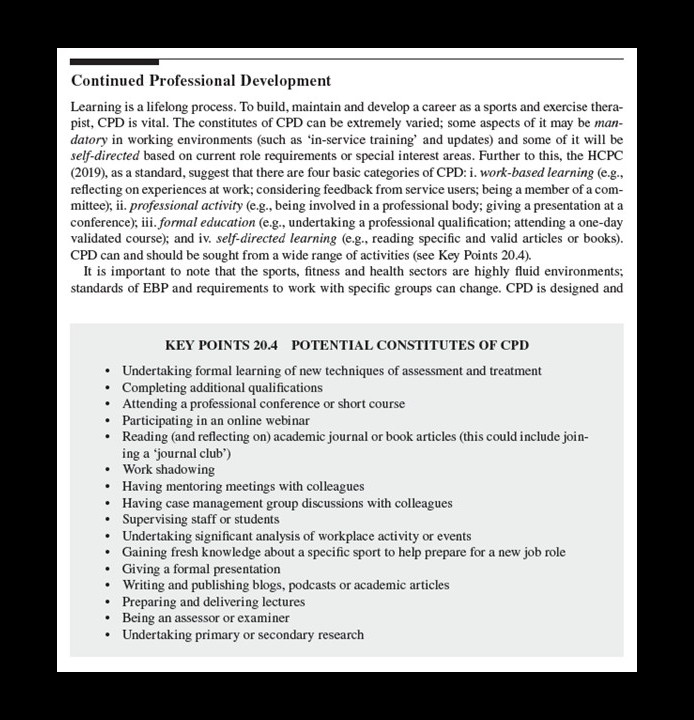
Extract from Pathways to Practise in Sports and Exercise Therapy, discussing CPD (Conway and Ward, 2024).
Hence, if you are a professional therapist, and massage is your thing, then there is plenty to learn in Thailand. Foundation courses, advanced courses and short workshop courses are readily available. I could only do what I could do in the time that I had on my recent trip, so if I get the opportunity again what might I like to immerse myself in? Traditional Thai foot and Thai head massage would be great; Thai facial massage would be too. Why not? These therapies are amazing to experience, and the types of courses typically run for two or three days each. More advanced training in TTM would also personally be appropriate (e.g., Thai Table Massage; Thai Bone-setting; Thai Warrior Massage). I am also interested to take workshops in Reusi Dat Ton (Traditional Thai Yoga) and Chi Kung, and gain more experience in meditation, sound healing and Muay Thai. There really is plenty to go and do – hopefully I’ll be there again later this year!
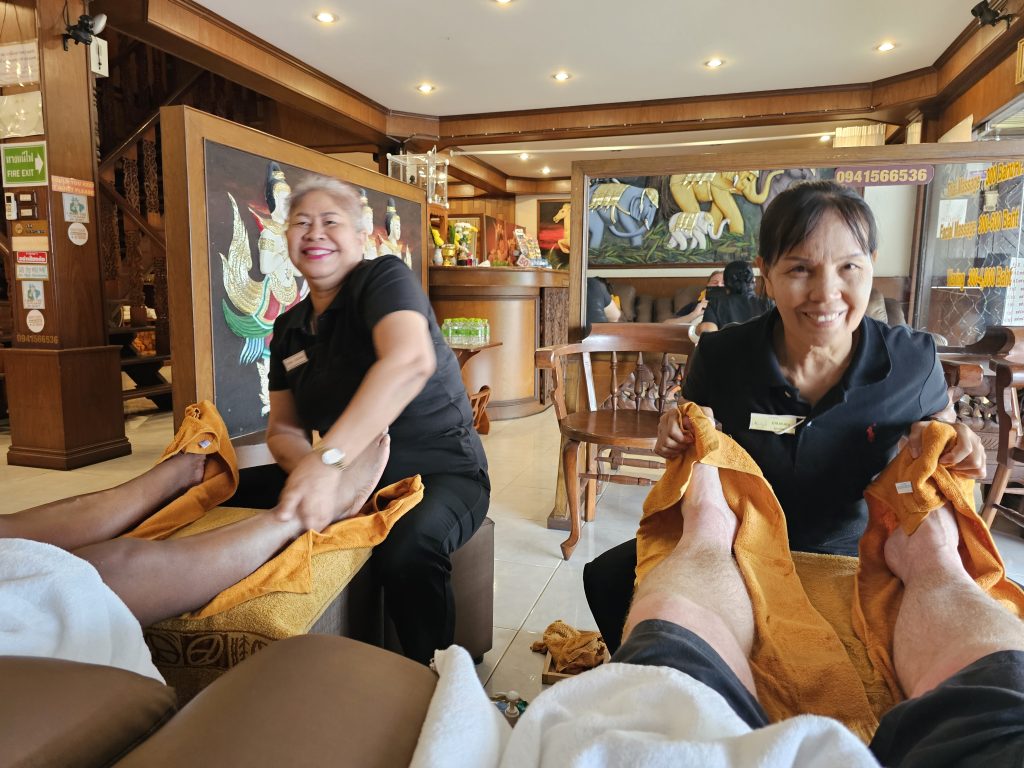
Thai foot massage (at My Friend Massage, Chaweng, Koh Samui).
Khop-kun krap (Thank you).
I hope you found this interesting. Stay tuned, keep well, and maybe I’ll see you later : ))
References
Berzin, A. (n.d.): What Is Tantra? https://studybuddhism.com/en/tibetan-buddhism/tantra/buddhist-tantra/what-is-tantra
Conway, D. and Ward, K. (2024) Pathways to Practise in Sports and Exercise Therapy. In Ward, K. Handbook of Sports and Exercise Therapy. Routledge https://www.routledge.com/Routledge-Handbook-of-Sports-and-Exercise-Therapy/Ward/p/book/9780367714598#
Crypsis (2004) Shamanism And Thai Culture. https://www.stickmanbangkok.com/readers-submissions/2004/08/shamanism-and-thai-culture/
Gold, R. (2007) Thai Massage: A Traditional Medical Technique 2nd ed. Mosby, Elsevier
Government Public Relations Department (2023) Pha Khao Ma to be proposed for UNESCO’s Intangible Cultural Heritage List. https://thailand.prd.go.th/en/content/category/detail/id/48/iid/163229
Haddad, B. (2013) Om Namo … What? The Thai massage wai khru. https://thaihealingalliance.com/wp-content/uploads/Om-Namo-…-What-The-Thai-Massage-Wai-Khru.pdf
Haddad, B. (2020) Interview with Bob Haddad. https://thaihealing-arts.com/wp-content/uploads/Interview-with-Bob-Haddad.pdf
Marin, G. (1999) Healing from Within with Chi Nei Tsang. Applied Chi Kung in Internal Organs Treatment. North Atlantic Books
MBLEx (Massage and Bodywork Licensing Exam) (2025) Bamboo massage 101: benefits, techniques, and training. https://mblexguide.com/bamboo-massage-101-benefits-techniques-and-training/
Osorio, S. (2008) Bamboo massage: a meeting of past and present. Massage and Bodywork Magazine. May/June. https://www.massagetherapy.com/articles/bamboo-massage
Pascale, S. (n.d.) The Chakras Revealed: Shattering seven common misconceptions: why everything you know about the chakras is probably incorrect (sorry!). https://www.thelightcollective.yoga/journal/the-chakras-revealed
Ramos, I. (2020) What is Tantra? https://www.britishmuseum.org/blog/what-tantra
Sansiriphun, N., Deeluea, J., Krikitrat, P. and Klunklin, A. (2023) The effects of Tok Sen massage menu for relaxation on muscle flexibility and relaxation among user of the Lanna spa service for health tourism. Nat. Life Sci. Commun. 22(2): e2023031 https://cmuj.cmu.ac.th/nlsc/journal/article/986
Sarita, M. A. (2024) What Is Tantra? A guide to understanding this sacred tradition. https://www.anandasarita.com/blog/what-is-tantra
Sheposh, J. (2013) The Art of Tok Sen. https://thaihealingalliance.com/wp-content/uploads/The-Art-of-Tok-Sen.pdf
Varapongsittikul, T. (2023) Pha Khao Ma: Thai way of life encapsulated in a piece of fabric. https://thailandfoundation.or.th/pha-khao-ma-thai-way-of-life-encapsulated-in-a-piece-of-fabric/
Ward, K. (2024) Handbook of Sports and Exercise Therapy. Routledge
Yankai. A., Leelarungrayub, J. and Laskin, J.J. (2023) preliminary study: short-term beneficial effects of Thai Tok Sen massage on pain, pressure pain threshold, and upper trapezius muscle thickness among people with shoulder pain. Int J Ther Massage Bodywork. 1;16(1): 3-12 https://pmc.ncbi.nlm.nih.gov/articles/PMC9949614/