A longish blog, I’m afraid – but it’s (still) an important discussion. It won’t make much difference, but I hope you appreciate it.
What’s in a name?
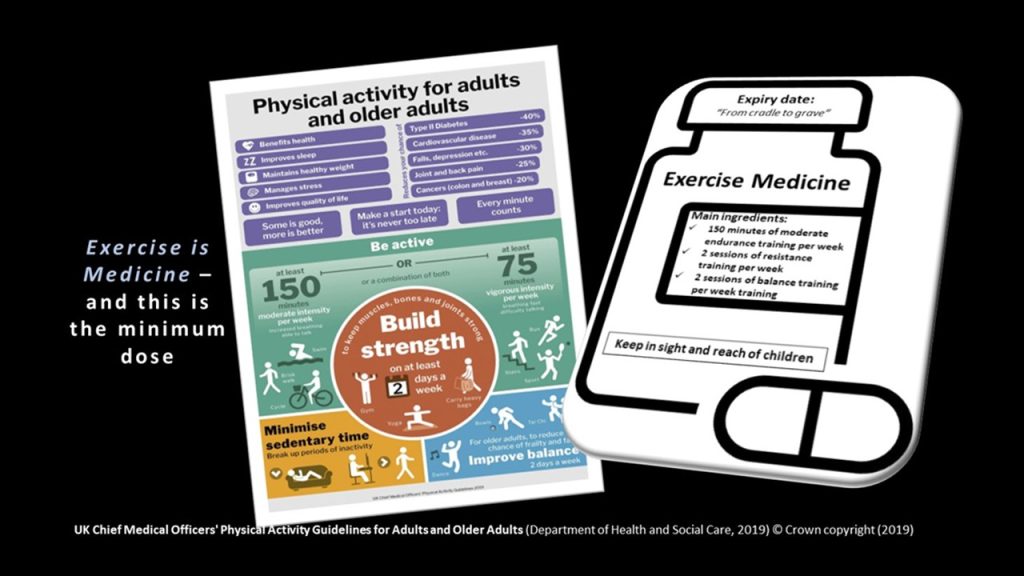
First of all, what’s in a name? ‘Exercise Medicine’, ‘Exercise Therapy’, ‘Exercise Rehabilitation’, ‘Physical’, ‘Movement’, or ‘Activity Therapy’ could all be interchanged. Sports and Exercise Medicine (SEM) became a General Medical Council (GMC) approved medical specialty only as recently as 2006. Alongside being a specialty focused on the health and care of athletes, the other primary component of the SEM remit is the practical application of Exercise Medicine in chronic disease management and prevention at an individual and population level.
It’s been a gradual historical time-line and development for sports and exercise medicine (see Berryman, 2010, McLatchie, 2010 and Tipton, 2014). It has antiquity and modernity in equal measure, with global and cultural roots and branches. The two most legendary physicians of the ancient world (Hippocrates, 460-370BC, and Galen, 129-210AD) espoused the importance of exercise. Famously, Hippocrates stated:
“Eating alone will not keep a man well, he must also take exercise”
Tipton (2014) highlighted how “Galen believed that training would cause ‘thinning’ of the body, harden and strengthen muscles, increase flesh (mass?), and elevate blood volume while achieving ‘good condition’ of the wrestler or heroes like Hercules and Achilles in Homer’s epics… Galen was prescribing exercise for weakened patients or for those afflicted with disorders or diseases associated with arthritis, depression, dropsy, epilepsy, gout, tuberculosis, and vertigo.”
Centuries passed and the medical profession progressed, and by the 19th century there was an emergence of physical education profession(s). Eventually, one contemporary landmarking in 1954 saw the inception of the American College of Sports Medicine (ACSM); and a little later, in 2007, the American Medical Association (AMA) and ACSM joint initiative ‘Exercise is Medicine’ (EIM) was founded. The goal of EIM was to support the integration of physical activity assessment and exercise prescription into routine healthcare practices. We have seen a growth of this model, and there are now currently National Centres EIM in 37 countries on six continents (North America, South America, Asia, Europe, Africa, and Australia), with three EIM Regional Centres in Asia, Latin America, and Europe (Thompson et al., 2020). Neunhaeuserer et al. (2021) also provided a useful overview of SEM in Europe.
Falconer et al. (2019) when promoting their recently prepared UK recommendations, reiterated the fact that physical activity continues to remain an underutilised tool for clinicians, yet the health benefits are far reaching. They presented the notion quite bluntly: “Exercise is one of the cheapest and most effective forms of medicine.” It must also be remembered that exercise and physical activity are convincingly preventative.
Medicalising Exercise
So, ‘Exercise as Medicine’ has a nice ring to it, but some may argue that we can over-medicalise useful interventions, which could result in disincentivising some of the very people the interventions are known and designed to help (possibly due to distrust of the medical community, or because of previous negative medical experiences). Medicalisation has been described as the process of taking non-medical problems and converting them into illnesses and disorders (Conrad and Schneider 2010), and where personal, behavioural, and social issues are increasingly viewed through a biomedical lens. In addition to this assertion, particularly in the realms of public health, the need for an increased awareness of the potential negative consequences of a medicalised view of health has been emphasised by Lantz, Goldberg and Gollust (2023). They highlighted how medicalisation is not always a negative force; they cite the reframing of smoking as ‘nicotine dependence’ which has its own diagnostic criteria and International Classification of Diseases code. Emerging over time from this reframing were significant increases in research and development into the harms of smoking and interventions to support smoking cessation.
However, with regard to exercise, many of the conditions that ‘it’ can be extremely beneficial for are clearly not non-medical. In this technological era, where human and artificial intelligence (AI), validated research, and collaborative and innovative thinking should at least influence (if not guide) best practice in life and health, one would logically expect that lifestyle, exercise, sport, music, art, cannabis, food, relaxation, nature, and even AI have a very relevant role to play in both broad and specific areas of medicine – maybe not for all, but for many – and these may be provided by qualified and reputable practitioners.
Social Prescribing
Another example of the expanding personalised conceptual model of medicine is that of ‘social prescribing’, where a GP is able to refer to recognised local community groups. These can take various forms, such as bereavement groups, dementia cafes, art classes, debt management services, gardening clubs, walking groups and more (NHS England, 2023). Quality assurance and auditing of impact outcome measures are essential components of such services. Social prescribing, which clearly can incorporate some level of prescribed physical activity, can help patients (or ‘service users’) to have greater control over their own health and find ways to improve in ways that suits them – in conjunction with any other required medical support. One key consideration here, I feel, is the notion that many conditions cannot be prevented nor cured by (traditional) medicine alone – and this is especially the case for those with chronic disease, mental health conditions, and those who are lonely or isolated, or have complex social needs. The medicalisation and prescription of social and lifestyle activities which have been identified by patients as what matters to them – and which have evidence to illustrate meaningful health effects – can facilitate the connection of patients to the very activities that make the required difference to their health situation.
There is a growing evidence-base for a broadened medical model; for example the British Society of Lifestyle Medicine (BSLM), founded in 2016 and part of the Lifestyle Medicine Global Alliance, is a professional association for health and medical practitioners who are evidence-based providers of clinical care that support behaviour change through person-centred techniques to improve mental well-being, social connection, healthy eating, physical activity, and sleep; and the promotion of strategies to help minimise the undertaking of behaviours which are detrimental to health (BSLM, 2023). There is still developing and exciting opportunity to show and use evidence-based practice across new and more recently establishing areas of intervention; and perhaps most importantly, to be able to reduce the over-prescribing of medicines for common chronic health conditions, to promote the concept of the active and empowered patient (rather than the ‘biomedicalised, passively reliant patient’) with an elevated sense of health literacy, and ultimately to reduce the potential for early mortality.
Published in the British Medical Journal (BMJ), Naci and Ioannidis (2013) completed a meta-epidemiological study into the comparative effectiveness of exercise and drug interventions on mortality outcomes. Their study included 305 randomised controlled trials (RCTs), over 300,000 participants and 16 meta-analyses. Exercise and drug interventions were in the main, similar in their mortality benefits in the secondary prevention of CVD and T2DM. This is just one, of many, comprehensive reviews demonstrating how exercise must play a significant role in medical care.
Joyner and Barnes (2013) presented reasoned arguments for treating physical inactivity as a medical issue. They propagated the view, originally presented by Chakravarthy and Booth (2004) and Booth, Laye and Roberts (2011) that “…the active state is the physiologic norm and the inactive state should be seen as the intervention or deviation from normal”, which when we consider our historically traditional human roles as hunter-gatherers and the need for survival, and later as skilled and physical builders, farmers, and manufacturers, makes sense when we reflect on currently accepted normative behaviours. The authors also incorporated consideration for categorising a physical inactivity diagnosis into two parts: i. primary deconditioning – simply too little physical activity; and ii. secondary deconditioning – caused by the inactivity resulting from an underlying medical condition – both of which can be realistically attended to (with reconditioning) in many cases. Interestingly, Wang et al. (2005) identified that yearly health care costs can be as much as 20% less than average for those who are sufficiently physically active; Lee and Ellington (2019) suggested that health care costs could be more like 25-35% lower.
More recently, Li, Qiu and Li (2023), emphasise how exercise can so effectively minimise unwanted consequences in health by helping to prevent or alleviate dysfunction after the onset of disease, and also contribute to prevent disease recurrence. They argue, alongside its role in managing cardiovascular, neurological and musculoskeletal disease, and cancer, that exercise also provides enhanced recovery after surgery. Early post-surgical mobilisation promotes the recovery of cardiorespiratory, gastrointestinal, musculoskeletal, and other multi-system functions, and is beneficial for the prevention of pulmonary infections, pressure sores, deep vein thrombosis (DVT) of the lower extremities, and other complications. Whilst these aspects of rehabilitation are well-recognised, especially in the field of physiotherapy, they simply contribute to the overwhelming evidence for the importance of exercise.
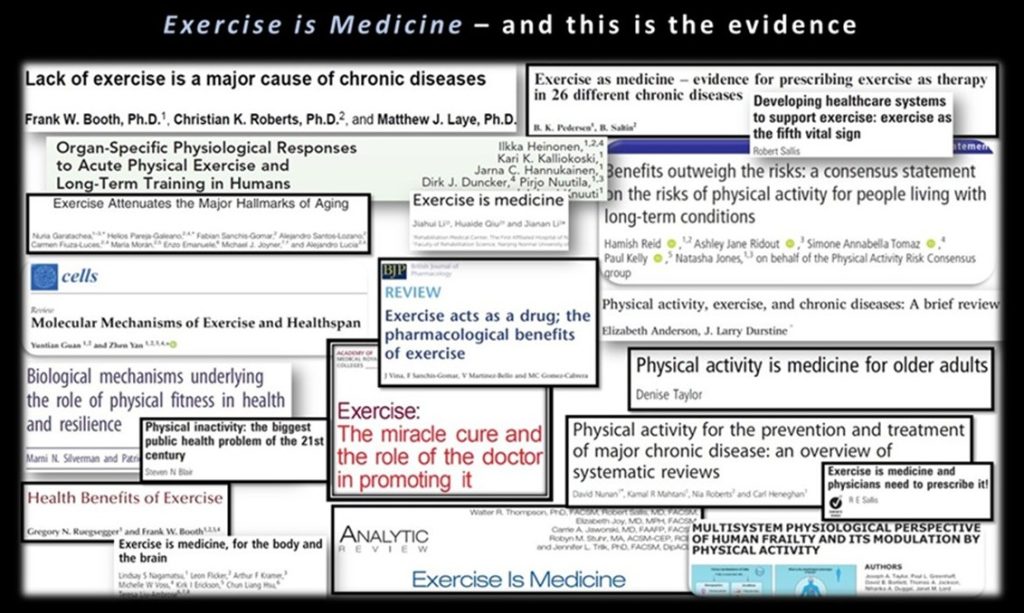
Hansford et al. (2022) add a further dimension to the discussion. In their overview of systematic reviews entitled “If exercise is medicine, why don’t we know the dose?” They found a range of disparity with regard to chronic conditions and the prescriptive dosages and recommendations within the evidence-base. Where there is a lack of clarity, there are implications in the translation of research to practice. The authors fully acknowledge the health-related effects of exercise, but highlight that when compared with medical trials, exercise trials can more often be of lower quality, be potentially at higher risk of bias, be less likely to report adverse events, and their interventions may not always be explicitly stated. For successful translation of research into practice, intervention components and their contextual variables must be sufficiently clarified for clinicians to be able to replicate them. Under systematic review scrutiny, these are valid concerns, especially as the EIM initiative gains greater traction with health care professionals.
As with any major topic area there is ongoing and wide-ranging discourse into the considerations of exercise as medicine; not least in how effective the phraseology and concept of ‘EIM’ is in reaching and connecting with the general public and its ability to promote widespread behaviour change. Exercise professions need to appreciate any counter-arguments to the use of exercise as medical intervention. Li and Laher (2020) question whether EIM itself is an effective means of promoting physical activity. They correctly explain how not all non-communicable diseases (NCD) are the result of sedentary lifestyles. Further to this, they suggest that the primary goal of medical treatment is to attempt the cure of abnormal conditions and steer physiological indicators towards normal or near-normal values. In contrast to this, exercise may be applied to provide an optimal stimulus to the body to promote better health – the authors argue this may generate what may be considered as ‘abnormal phenomena’ in clinical medicine. Hence they propose that “…medicine restores health and exercise promotes health.” The final point presented by Li and Laher (2020) quite rightly highlights how (uncontrollably) some people engage in unscientific and unsuitable physical exercise; but overall, exercise in these arguments, stands up strong as a method for improving health even if the badging of the intervention as medicine is challenged by some. Cavallini and Dyck (2020) highlight how “…exercise is respected by many, but only partaken by few” and present the consideration for a shift of the paradigm, potentially moving to a broader ‘Lifestyle Physical Activity as Medicine’, which may support peoples’ preferences for movement that is more meaningful to them. This compares with the concept of Movement for Movement (Gates et al., 2016) which highlights the perceivable restrictions associated with “…framing exercise as medicine that could potentially preclude the engagement of a diverse, global and connected community of practice.”
Exercise is like medicine in so many ways…
Check this (adapted from Swisher et al., 2010):
- Exercise can be prescribed, with a specific dosage and formulation for each individual patient diagnosed with a disease. This prescription needs to be specific with regard to frequency, intensity, time and type.
- The dosage of any medical intervention is critical to its success.
- The field of pharmacology and understanding of pharmacokinetics illustrate how any drug must be in a therapeutic range in order to have its desired effects.
- With too much medication there is a risk of toxic effects, and with too little there is no benefit, therefore – in relation to exercise – it is critical to appreciate how much and what type of exercise must be taken by the patient to have the most benefit.
- When an exercise programme has been indicated, designed and delivered, but does not translate into meaningful change in aerobic capacity, strength, balance, or flexibility – then this could mean that the patient has not taken enough to have therapeutic effects.
- Where there are minimal or no meaningful changes (or worsening) in health and fitness a number of factors may be at play: insufficiency in the programme; patient non-adherence; ongoing detrimental health behaviours (e.g., poor nutrition; excessive sedentary behaviour); a deterioration in the patient’s condition; or the development of new health issues.
The evidence-base for the positive health and disease improving effects of physical activity, exercise and sport is forever growing, and it attracts research interest from a wide variety of fields which are keen to examine its effect on health, development, ageing, injuries, disease, psychology, society, culture, landscape, economics and politics. As Stensel (2022) explains:
“…there is ample evidence supporting the benefits of exercise for body composition, skeletal health and metabolic health and hence a reduced risk of various chronic diseases including CVD, cancer, T2DM and osteoporosis, as well as enhanced longevity and benefits for mental health… These benefits apply to children, adults and older adults.”
Innumerable primary studies have been published examining and comparing the effects of specific exercise interventions against usual care (including physiotherapy), pharmacology, counselling, and more on all manner of health conditions, and from these a plethora of literature and systematic reviews and expert commentaries have emerged. Pedersen and Saltin (2015) undertook a large review examining the evidence, mechanisms of effect, and contraindications to exercise as medicine for numerous conditions ranging from chronic lower back pain through to cancer. This review is a good starting point for appreciating exercise as a highly validated intervention and for what the authors explain how “…(exercise) represents a cornerstone in the primary prevention of at least 35 chronic conditions.”
Vina et al. (2012) produced a review examining how exercise may act as a drug, emphasising its resulting potential beneficial systemic, myokine, antioxidant, and psychoactive effects and adaptations; their caveats were centred around the requirement for appropriate dosage – as with any drug unfavourable side effects may occur – and the recognition of when exercise should be contraindicated.
We also now know much more about exercise-induced hypoalgesia (EIH). Rice et al. (2019) explain how this is the generalised reduction in pain and pain sensitivity that can occur during exercise and for some time afterwards. Central to EIH are the known increases in endogenous opioids and cannabinoids post-exercise. Exercise has also been shown to induce beneficial metabolic brain activity, including release of neurotrophic proteins such as brain-derived neurotrophic factor (BDNF) which is associated with protection during neural development, facilitation of synaptogenesis, and positive brain plasticity which promotes cognitive improvement as well as alleviating depression and anxiety (Sleiman et al., 2016). Exercise promotes fitness, which in turn quite obviously improves both performance and performance confidence and self-efficacy. It also drives reductions in fatigue – which is a key aspect in helping people remain engaged with physical activity, when they can truly experience such affection.
The list does go on, indeed, the potential effects of exercise – especially the physiological – are clearly a wide-ranging and complex set of interacting biochemical reactions, responses, processes and resulting adaptations which may translate into positive health and performance changes for the individual. Kenney, Wilmore and Costill (2020) do, however, remind us that there are high and low responders – which means there is a great deal of individual variability in how people respond to exercise therapy. Notwithstanding, identified here are just some of the arguments for exercise as a medicine – if an argument is required…
There are many practitioners qualified to provide (assess for, prescribe, and coach) exercise as treatment or therapy to prevent or manage health conditions – these may be (in no particular or hierarchical order) physiotherapists, sports therapists, sports rehabilitators, clinical exercise physiologists, athletic trainers, personal trainers, strength and conditioning practitioners, and exercise referral professionals. There are good and not so good practitioners – just as with any field.
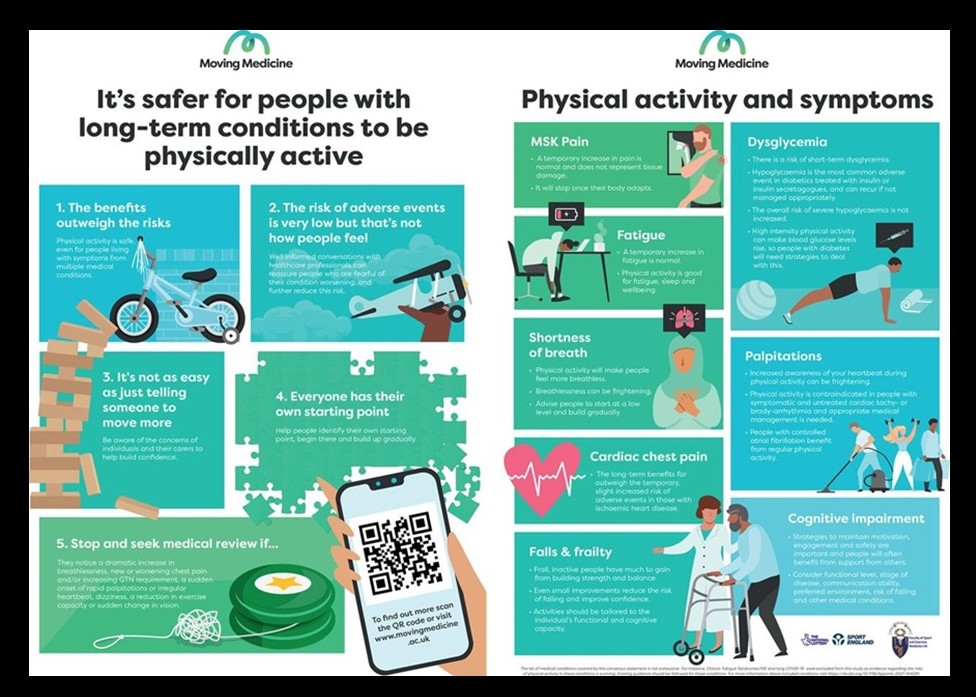
My belief is that our doctors should be (arguably much more routinely) discussing physical activity with their patients – just as they would discuss their diet, body weight, smoking and blood pressure. If a patient doesn’t get positive reinforcement from their doctor, why are they going to place trust in an exercise professional, let alone seek one out to help them? Medical curricula has moved on in the last 10 years to incorporate teaching of evidence-based exercise medicine – but still too many people are insufficiently active for their own good. Like many things in this life, it is quite baffling to think that good amounts of daily physical activity do not feature in many people’s lives, and how – when health issues begin to manifest – we so routinely turn to prescription drugs rather than recognising how exercise can create meaningful change in all of our body systems. Reid and colleagues (2022) presented quite clearly how the benefits of exercise so clearly outweigh the risks…
Nb. Some aspects of this article have been adapted from the pretty weighty and very excellent(!) Exercise as Medicine chapter in my last book (Ward, 2024). The ebook is currently on a good offer! https://www.routledge.com/Routledge-Handbook-of-Sports-and-Exercise-Therapy/Ward/p/book/9780367714598?srsltid=AfmBOorUv-fZrMhmSrfrd_s7D4BMRjgWECgBc7y5K0G5azwJGA5IyPZv
Please do be in touch if you’d like some assistance on your own physical activity journey.
I hope you found this interesting. Stay tuned, keep well, and maybe I’ll see you later : ))
References
Berryman, J.W. (2010) Exercise is Medicine: A historical perspective. Current Sports Medicine Reports. 9(4): 195-201
Booth, F.W., Roberts, M.D. and Laye, M.J. (2012) Lack of exercise is a major cause of chronic diseases. Compr Physiol. 2(2): 1143-1211 doi:10.1002/cphy.c110025
BSLM (British Society of Lifestyle Medicine) (2023) About BSLM. Available at https://bslm.org.uk/about/about-us/ Accessed April 2023
Cavallini, M.F., Dyck, D.J. (2020) Exercise is Medicine! Why are people not buying into the prescription? J Fam Med Dis Prev. 6:125 doi:10.23937/2469-5793/1510125
Chakravarthy, M.V. and Booth, F.W. (2004). Eating, exercise, and ‘thrifty’ genotypes: Connecting the dots toward an evolutionary understanding of modern chronic diseases. J Appl Physiol. 96: 3-10
Conrad, P. and Schneider, K.K. (2010) The social construction of illness: Key insights and policy implications. Journal of Health and Social Behavior. 51: 1 suppl. S67-S79
Falconer, C., Foster, C., Calderwood, C., McBride, M., Atherton, F. and Davies, S. (2019) (2019) UK CMOs: When it comes to physical activity some is good, but more is better. BMJ Blog. Available at https://blogs.bmj.com/bmj/2019/09/07/cmos-new-physical-activity-guidelines-demonstrate-under-appreciation-as-a-clinical-approach/ Accessed April 2023
Gates, A.B., Kerry, R., Moffatt, F., et al (2016) Movement for movement: Exercise as everybody’s business? Br J Sports Med. 0: 1-2
Joyner, M. and Barnes, J. (2013) The medicalization of inactivity. Physiology News. 90: 18-21
Kenney, W.L., Wilmore, J.H. and Costill, D.L. (2020) Physiology of Sport and Exercise 7th ed. Human Kinetics. Champaign, IL, USA
Lantz, P.M., Goldberg, D.S. and Gollust, S.E. (2023) The Perils of Medicalization for Population Health and Health Equity. Milbank Q. 101(S1): 61-82 doi:10.1111/1468-0009.12619
Lee, D. and Ellingson, L. (2019) Physical inactivity and ill health. In Draper, N. and Stratton, G. (eds) Physical Activity: A multidisciplinary introduction. Routledge. Oxon, UK
Li, J., Qiu, H. and Li, J. (2023) Exercise is medicine. Frontiers in Aging Neuroscience. 15 doi:10.3389/fnagi.2023.1129221
Li, S. and Laher, I. (2020) Rethinking “Exercise is Medicine”. EXCLI J. 18(19): 1169-1171 doi:10.17179/excli2020-2613
McLatchie, G.R. (2010) Sport and Exercise Medicine: The state of play. Scottish Medical Journal. 55(2): 3-4
Naci, H. and Ioannidis, J.P.A. (2013) Comparative effectiveness of exercise and drug interventions on mortality outcomes: A meta-epidemiological study. British Medical Journal. 347: f5577 doi:10.1136/bmj.f5577
Neunhaeuserer, D., Niebauer, J., Degano G. et al. (2021) Sports and exercise medicine in Europe and the advances in the last decade. British Journal of Sports Medicine. 55: 1122-1124
NHS England (2023) Social prescribing. Available at https://www.england.nhs.uk/personalisedcare/social-prescribing/ Accessed September 2023
NICE (National Institute for Health and Care Excellence) (2023) Physical Activity Products: A list of all our products on physical activity. Available at https://www.nice.org.uk/guidance/lifestyle-and-wellbeing/physical-activity/products?Status=Published Accessed April 2023
Pedersen, B.K. and Saltin, B. (2015) Exercise as medicine: evidence for prescribing exercise as therapy in 26 different chronic diseases. Scand J Med Sci Sports. 25: 1-72
Rice, D., Nijs, J., Kosek, E., Wideman, T., Hasenbring, M.I., Koltyn, K., Graven-Nielsen, T. and Polli, A. (2019) Exercise-induced hypoalgesia in pain-free and chronic pain populations: State of the art and future directions. J Pain. 20(11): 1249-1266 doi:10.1016/j.jpain.2019.03.005
Reid, H., Ridout, A.J., Tomaz, S.A. on behalf of the Physical Activity Risk Consensus group, et al. (2022) Benefits outweigh the risks: a consensus statement on the risks of physical activity for people living with long-term conditions. British Journal of Sports Medicine. 56: 427-438
Sleiman, S.F., Henry, J., Al-Haddad, R., El Hayek, L., Abou Haidar, E., Stringer, T., Ulja, D., Karuppagounder, S.S., Holson, E.B., Ratan, R.R., Ninan, I. and Chao, M.V. (2016) Exercise promotes the expression of brain derived neurotrophic factor (BDNF) through the action of the ketone body β-hydroxybutyrate. eLife. 2;5: e15092 doi:10.7554/eLife.15092
Swisher, A.K. (2010) Yes, “Exercise is Medicine”… but it is so much more! Cardiopulm Phys Ther J. 21(4): 4
Thompson, W.R., Sallis, R., Joy, E., Jaworski, C.A., Stuhr, R.M. and Trilk, J.L. (2020) Exercise Is Medicine. American Journal of Lifestyle Medicine. 14(5): 511-523
Tipton, C.M. (2014) The history of “Exercise Is Medicine” in ancient civilizations. Adv Physiol Educ. 38(2): 109-17 doi: 10.1152/advan.00136.2013
Vina, J., Sanchis-Gomar, F., Martinez-Bello, V. and Gomez-Cabrera, M.C. (2012) Exercise acts as a drug; the pharmacological benefits of exercise. British Journal of Pharmacology. 167: 1-12
Wang, F., McDonald, T., Reffitt, B. and Edington, D.W. (2005) BMI, physical activity, and health care utilization/costs among Medicare retirees. Obes Res. 13: 1450-1457
Ward, K. (2024) Sports and exercise as medicine. In Ward, K. (ed) Handbook of Sports and Exercise Therapy 2nd ed. Routledge. Oxon., UK
© Copyright Keith Ward 2025